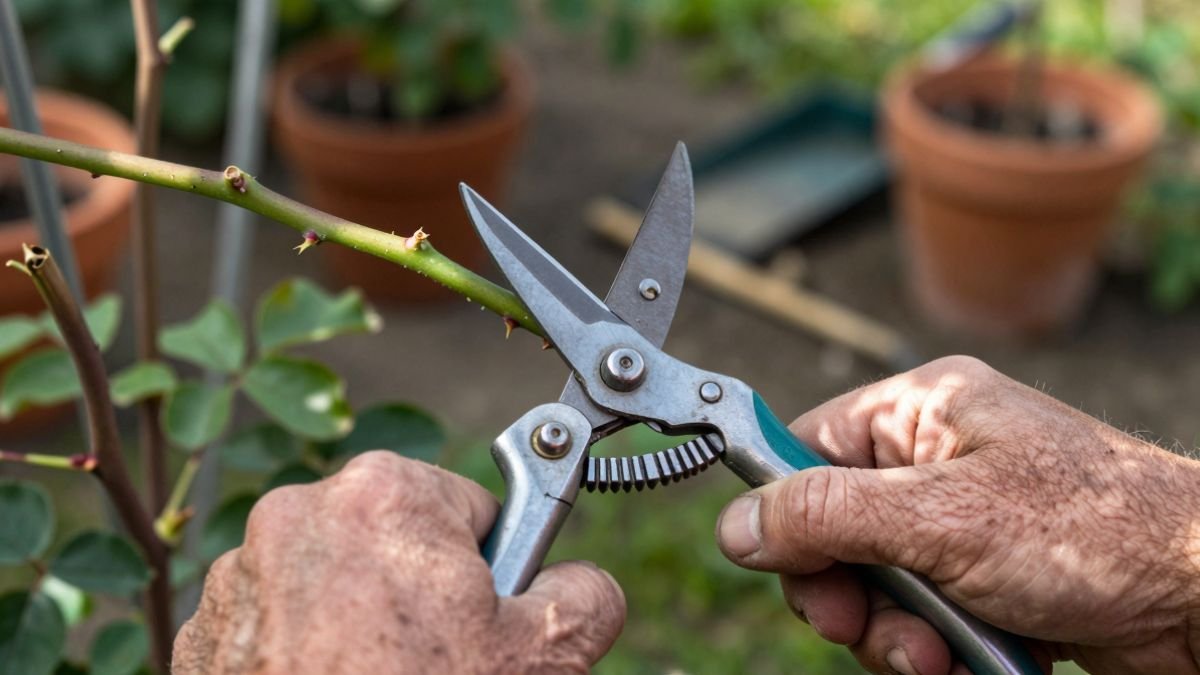
We’ve all been there—standing in the garden, wondering why our once-thriving roses look stunted, or why that beautiful hydrangea just won’t bloom like it used to. We blame the weather, the soil, maybe even ourselves. But what if I told you the real culprit might be sitting in your tool shed right now?
The truth is, most of us are using the wrong cutting tools—or worse, using them incorrectly. And those innocent mistakes? They’re quietly sabotaging our plants’ health, one cut at a time.
First things first: shears, pruners, and snips aren’t the same thing
Let’s clear up the confusion. When we casually say “gardening shears,” we’re usually talking about one of three tools:
- Pruning shears (secateurs): Spring-loaded, one-handed tools for stems up to ¾ inch thick. Your everyday workhorse for roses, shrubs, and perennials.
- Hedge shears: Long-handled, two-handed scissors for shaping hedges and trimming large areas of soft growth.
- Snips (floral scissors): Lightweight, precision tools for deadheading flowers, harvesting herbs, and delicate cuts.
Using hedge shears on a rose stem? That’s like using a chainsaw to slice bread. It works, but the result is messy—and your plant pays the price.

The 5 cutting mistakes that are holding your garden back
1. The crushing cut
The mistake: Using dull blades that crush stems instead of slicing cleanly through them.
Why it matters: Crushed tissue creates entry points for disease and slows healing. Your plant wastes energy trying to recover instead of growing.
2. The “stub” problem
The mistake: Leaving too much stem above a bud or node (that little bump where new growth emerges).
Why it matters: The stub dies back, inviting rot and pests. Always cut ¼ inch above a bud, angled away from it.
3. The jagged tear
The mistake: Twisting or pulling while cutting, especially on thicker stems.
Why it matters: Torn bark and ragged edges = slow healing and vulnerability. Let the tool do the work—squeeze firmly and smoothly.
4. The disease spreader
The mistake: Moving from plant to plant without cleaning your blades.
Why it matters: You’re literally transplanting bacteria and fungi. Wipe blades with rubbing alcohol or a 10% bleach solution between plants, especially if you’ve cut diseased growth.
5. The wrong-season massacre
The mistake: Pruning spring-blooming shrubs in fall (bye-bye, next year’s flowers) or summer-pruning plants that need winter dormancy.
Why it matters: Timing is everything. We’ll cover that below.
Keeping your tools sharp and clean (it’s easier than you think)
You don’t need a degree in tool maintenance. Here’s the simple routine:
- After every use: Wipe blades with a dry cloth. Remove sap with rubbing alcohol.
- Monthly (or after 10 hours of use): Sharpen with a whetstone or file. Keep the original bevel angle—usually around 20 degrees.
- Before storage: Apply a thin coat of oil (3-in-1 works great) to prevent rust.
Disinfecting protocol: If you’ve cut diseased or dead wood, dip or spray your blades with 70% isopropyl alcohol. Let them air dry—it takes 30 seconds.

Choosing the right tool for your hands (yes, size matters)
Not all pruners are created equal. If your hand aches after 20 minutes, you’ve got the wrong fit.
- Small hands (women’s S/M glove size): Look for compact bypass pruners with a ¾-inch cutting capacity. Brands like Felco #6 or Corona BP 3180 are designed with smaller grips.
- Medium hands: Standard 8-inch bypass pruners (Felco #2 is the gold standard, but Fiskars makes excellent budget options).
- Large hands or arthritic grip: Ratcheting pruners or ergonomic models with rotating handles reduce strain. Check out Fiskars PowerGear or ARS HP-VS8Z.
- Heavy-duty work: Bypass loppers for stems 1–2 inches thick. Anvil pruners for dead wood only (they crush living stems).
Your seasonal pruning cheat sheet
Spring (March–May):
Prune summer-blooming shrubs (roses, butterfly bush, crape myrtle) just as buds swell. Remove dead wood from everything.
Summer (June–August):
Light shaping only. Deadhead spent flowers. Avoid heavy pruning—plants are in active growth mode.
Fall (September–November):
Resist the urge! Most pruning now encourages tender new growth that winter will kill. Exception: removing diseased/damaged branches.
Winter (Decembeebruary):
Prime time for dormant pruning. Shape fruit trees, structural pruning for shrubs, and thinning crowded branches. Spring-bloomers (lilac, forsythia, azalea) get pruned after they flower.

Safety tips (because emergency room visits aren’t fun)
- Always cut away from your body. One slip with sharp blades, and you’ll understand why surgeons use the same steel.
- Wear gloves. Not garden gloves—actual work gloves with reinforced palms. Thorns and blisters are avoidable.
- Lock your pruners when not in use. Many models have a safety catch. Use it, especially if kids or pets are around.
- Don’t overreach. Unstable footing + sharp tools = bad combination. Use a sturdy step stool for high branches, or better yet, get loppers with extendable handles.
The bottom line? Your plants want to thrive. They’re biologically programmed for it. But they need us to make clean, strategic cuts with the right tools at the right time. Master these basics, and you’ll be shocked at how much more vigorous your garden becomes—not because you’re doing more, but because you’re finally doing it right.
Now go check those blades. If you can’t slice a piece of paper cleanly, it’s time to sharpen.