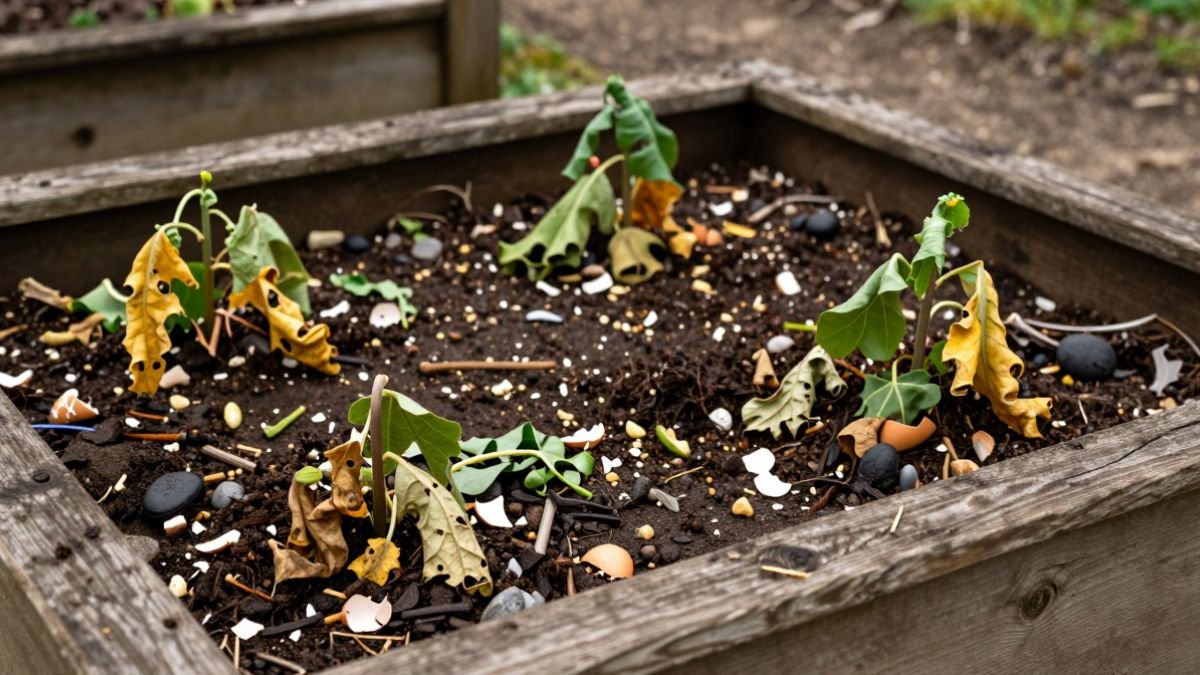
Here’s something most gardening guides won’t tell you: that beautiful, dark compost you’ve been nurturing for months can actually harm your plants if you’re not careful. We’ve all been taught that compost is gardening gold—and it is—but using it incorrectly is one of the most common mistakes even experienced gardeners make.
The truth is, pure compost isn’t soil. And treating it like soil is exactly how we end up with yellowing seedlings, stunted growth, and that heartbreaking moment when our carefully started plants just… stop thriving.
The hidden dangers lurking in your compost bin
Let’s talk about what’s really happening in that rich, dark material. Compost—especially fresh or “hot” compost—contains concentrated nutrients that seedlings and young plants simply can’t handle. Think of it like this: you wouldn’t feed a newborn baby a steak dinner. Plants need the same graduated approach.
Three main culprits cause compost problems:
- Immature compost still breaking down releases nitrogen that literally burns tender roots
- High salt levels accumulate from decomposition, drawing moisture away from plant cells
- Dense texture lacks the air pockets roots need to breathe and expand
The result? Those telltale signs we’ve all seen: leaves turning yellow at the edges, wilting despite adequate water, or seedlings that germinate but never seem to grow beyond their first true leaves.
How to know if your compost is ready (the real test)
Forget the “it looks dark and crumbly” advice. We need to be more precise than that.
Mature compost should:
- Smell earthy and sweet, never ammonia-like or sour
- Have no visible food scraps or recognizable plant matter
- Feel cool to the touch (not warm from active decomposition)
- Crumble easily without clumping into sticky balls
Here’s a simple test we use: fill a small pot with pure compost, plant fast-growing radish seeds, and watch for a week. If they germinate normally and grow steadily, your compost is mature. If they yellow or stall, it needs more time.
Safe compost blending rates by plant type
This is where most of us get it wrong. There’s no one-size-fits-all ratio. Different plants have vastly different tolerance levels.
Safe mixing ratios
| Plant Type | Compost | Native Soil/Potting Mix | Notes |
|---|---|---|---|
| Seedlings & Starts | 10-15% | 85-90% | Use only fully mature, screened compost |
| Heavy Feeders (tomatoes, peppers, squash) | 25-30% | 70-75% | Can handle richer mixes once established |
| Moderate Feeders (lettuce, beans, herbs) | 20-25% | 75-80% | Sweet spot for most vegetables |
| Light Feeders (carrots, radishes, onions) | 10-15% | 85-90% | Prefer leaner soil conditions |
| Established Perennials | 15-20% | 80-85% | Apply as top dressing or amendment |
Pro tip: When in doubt, go lighter. You can always add more compost as a top dressing later, but you can’t remove it once mixed in.

Screening and aging: the insurance policy
Even if your compost looks ready, taking these extra steps protects your plants from surprises.
Screen your compost through ½-inch hardware cloth to remove:
- Large wood chunks that haven’t decomposed
- Clumps that might contain hot spots
- Debris that could harbor pests
Age it an extra month after you think it’s done. Spread it 2-3 inches deep in a shaded area and let it cure. This final rest period allows any remaining volatile compounds to dissipate and salt levels to normalize.
Troubleshooting yellowing and wilting
Caught the problem mid-season? Here’s how we fix it:
For yellowing leaves (likely salt burn):
- Flush containers with plain water—run twice the pot volume through the soil
- For garden beds, water deeply and consistently for a week
- Add a 2-inch layer of plain topsoil or potting mix as a buffer layer
For wilted, stunted seedlings:
- Carefully transplant to a leaner mix (80-90% fresh potting soil)
- Don’t fertilize for 2-3 weeks—let roots recover
- Provide shade during midday heat to reduce stress
Prevention is always easier: test your compost with sacrificial plants (like fast-growing lettuce) before committing your prized seedlings to it.

The sustainable approach to compost use
Here’s our philosophy: compost is too valuable to waste through misuse, and our plants are too important to gamble with. By treating compost as a powerful amendment rather than a replacement for soil, we honor both.
Start conservative with your ratios. Watch how your plants respond. Adjust gradually. Keep notes on what works for your specific garden conditions—your soil, your climate, your compost ingredients all create a unique equation.
And remember, a little patience now means thriving plants all season long. That’s the kind of gardening success we’re all working toward together.