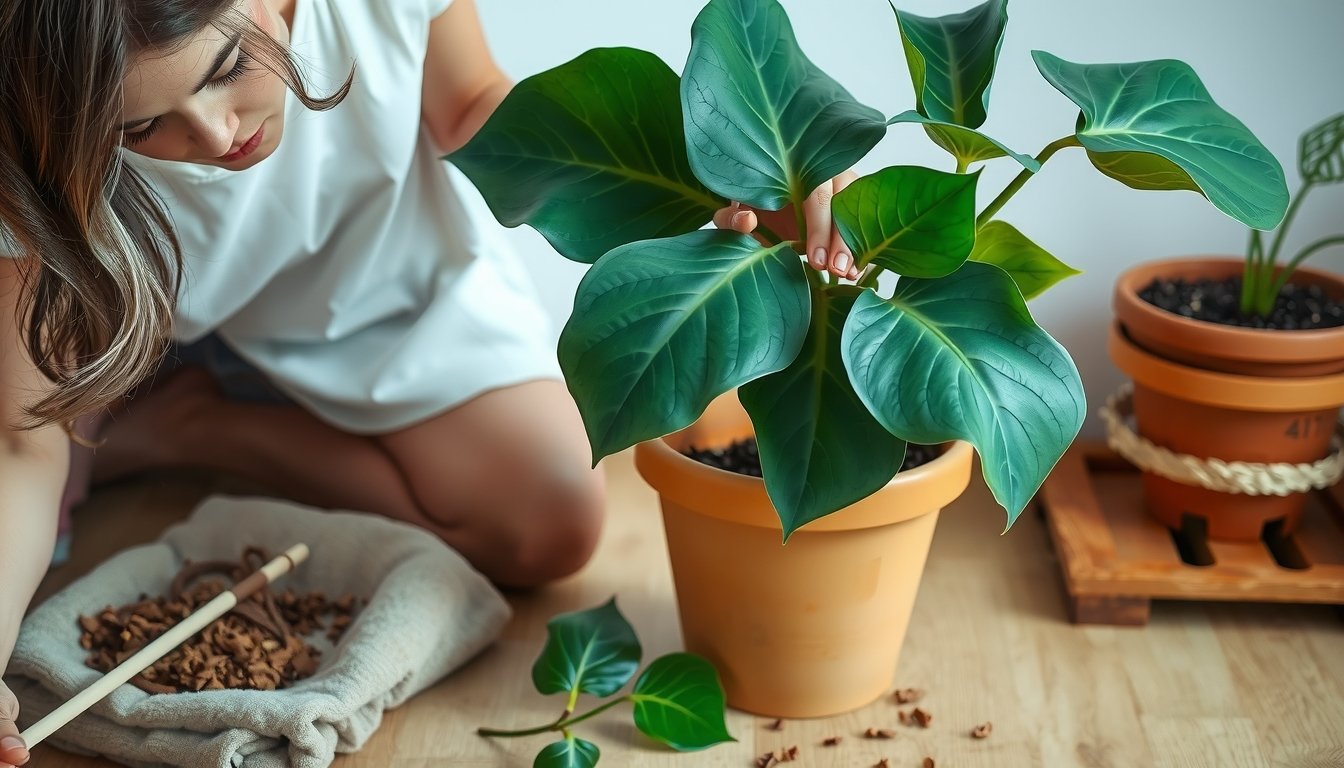
You lift the edge of your favorite fiddle-leaf fig’s pot, and suddenly the soil seems to move. Dozens of tiny, pale bugs leap and scatter like fleas. Your first thought? Panic. Your second? Google. But here’s the truth most plant parents don’t know: springtails are often a helpful cleanup crew, not a pest—and their sudden appearance is your plant telling you something fixable.
Let’s walk through what’s really happening in that pot, when to worry, and how to get your watering routine back on track before the new year.
What springtails actually look like (and why they’re not fungus gnats)
Springtails are tiny, wingless insects that range from white to gray or tan, usually no bigger than a pinhead. The giveaway? They have a spring-loaded tail that lets them jump erratically when disturbed. If you see them on the soil surface or around drainage holes, you’re looking at springtails.
Fungus gnats, on the other hand, are small black flies that hover around your plants and windows. They have wings, they’re slower, and they’re far more annoying. Springtails don’t fly. They don’t bite. They don’t damage roots or leaves. They’re soil-dwellers that feed on decaying organic matter—fungi, dead roots, leaf litter—and they’re actually part of a healthy decomposition cycle in nature.
The confusion comes because both show up under the same conditions: consistently wet soil. But springtails are the symptom, not the disease.

Why they’re in your pots right now
Springtails thrive in moist, organic-rich environments. If you’re seeing them in late December 2025, it’s likely because:
- You’ve been watering more often than your plants need during the shorter, cooler days of winter. Indoor plants slow their growth significantly when daylight drops, so they drink far less.
- Your potting mix is staying wet longer due to lower temperatures, less airflow, or heavier soil composition.
- There’s decaying matter in the pot—old leaves, uncomposted bark, or organic fertilizer breaking down in the top layer.
Springtails didn’t invade. They were likely already in your soil (or arrived via a new plant or bag of potting mix) and exploded in population once conditions became ideal. Think of them as the canaries in the coal mine: they’re signaling that your soil ecology is out of balance.
When springtails are harmless vs. when they’re a red flag
Here’s the nuance: a few springtails are normal and even beneficial. In small numbers, they help break down organic material and aerate the top layer of soil. You might never even notice them.
But a visible infestation—hundreds jumping around every time you water—means your soil is staying too wet for too long. And that’s a problem, because the same conditions that springtails love also invite root rot.
If your plant is:
- Yellowing at the base
- Wilting despite wet soil
- Smelling sour or musty when you stick your finger in
- Showing soft, brown roots when you gently tug
…then the springtails aren’t the issue. Overwatering and poor drainage are. The springtails are just feasting on the fungi and decay that result.
If your plant looks healthy, perky, and green? The springtails are mostly cosmetic. But it’s still worth dialing back the moisture.
Fast fixes: how to dry out and rebalance your soil
You don’t need pesticides or a full repot. Most springtail problems resolve once you interrupt the wet cycle and improve airflow. Here’s your action plan:
Let the soil dry down properly. For most tropical houseplants, the top 2–3 inches should feel dry before you water again in winter. Use your finger or a wooden skewer to check moisture below the surface.
Switch to bottom-watering or reduce volume. Instead of drenching from the top, place your pot in a shallow tray of water for 10–15 minutes and let the roots drink what they need. This keeps the top layer drier, which discourages springtails.
Improve airflow around your plants. A small fan on low speed, or simply spacing pots farther apart, helps the soil surface dry faster and reduces humidity pockets.
Remove leaf litter and debris. Any dead leaves, spent flowers, or mulch sitting on the soil surface is springtail food. Clear it away.
Check your drainage. If water pools on the surface or takes more than a few seconds to soak in, your soil may be compacted or too heavy. Consider adding perlite or repotting in spring.
If you want them gone: safe control options
Sometimes you just want a clean slate. Here are the gentlest, most effective methods:
Top-dress with a dry layer. Spread a half-inch of sand, diatomaceous earth, or fine gravel over the soil surface. This creates a dry barrier that springtails avoid and makes the environment less hospitable.
Use a hydrogen peroxide soil drench. Mix one part 3% hydrogen peroxide with four parts water and water your plant as usual. This kills fungus and organic matter in the top layer (springtail food) without harming roots. Repeat once a week for two weeks if needed.
Let the pot dry out completely for a few days. If the plant can tolerate it (succulents, snake plants, pothos), let the soil go bone-dry. Springtails will migrate away or die off.
Repot if the infestation is severe. Shake off the old soil, trim any rotted roots, and replant in fresh, well-draining mix. This is the nuclear option, but it works.
Avoid chemical insecticides. Springtails aren’t harmful, and most sprays are overkill that can damage beneficial soil life or stress your plant.

Your winter watering prevention checklist
Springtails are a wake-up call to rethink your routine for the season. Use this checklist to stay ahead:
- Water less frequently. Most plants need 30–50% less water from November through February.
- Water in the morning. This gives the soil all day to start drying before nighttime temperatures drop.
- Use pots with drainage holes. No exceptions. Cachepots are fine, but the inner pot must drain.
- Check soil moisture before every watering. Don’t water on a schedule—water based on what the plant needs.
- Increase light if possible. More light = more photosynthesis = more water uptake. Move plants closer to windows or add a grow light.
- Avoid heavy organic fertilizers in winter. Slow-release pellets and compost can create pockets of decay if plants aren’t actively growing.
If you do these six things, you’ll not only prevent springtails—you’ll also dodge root rot, fungus gnats, and a host of other winter plant problems.
The takeaway: listen to what your soil is telling you
Springtails aren’t the enemy. They’re messengers. They’re telling you the soil is too wet, the organic matter is breaking down faster than your plant can use it, and it’s time to adjust.
In most cases, a simple dry-down and a tweak to your watering habits will send them packing. If your plant is healthy, you can even leave a small population alone—they’ll keep working quietly in the background, doing what they’ve done in forests for millions of years.
But if you’re seeing hundreds, or if your plant is showing signs of stress, act now. The next few weeks are critical for winter plant care, and getting your moisture balance right will set you up for a thriving spring.
Grab your watering can, check that soil, and give your plants the reset they’re asking for. They’ll thank you with new growth when the light comes back.