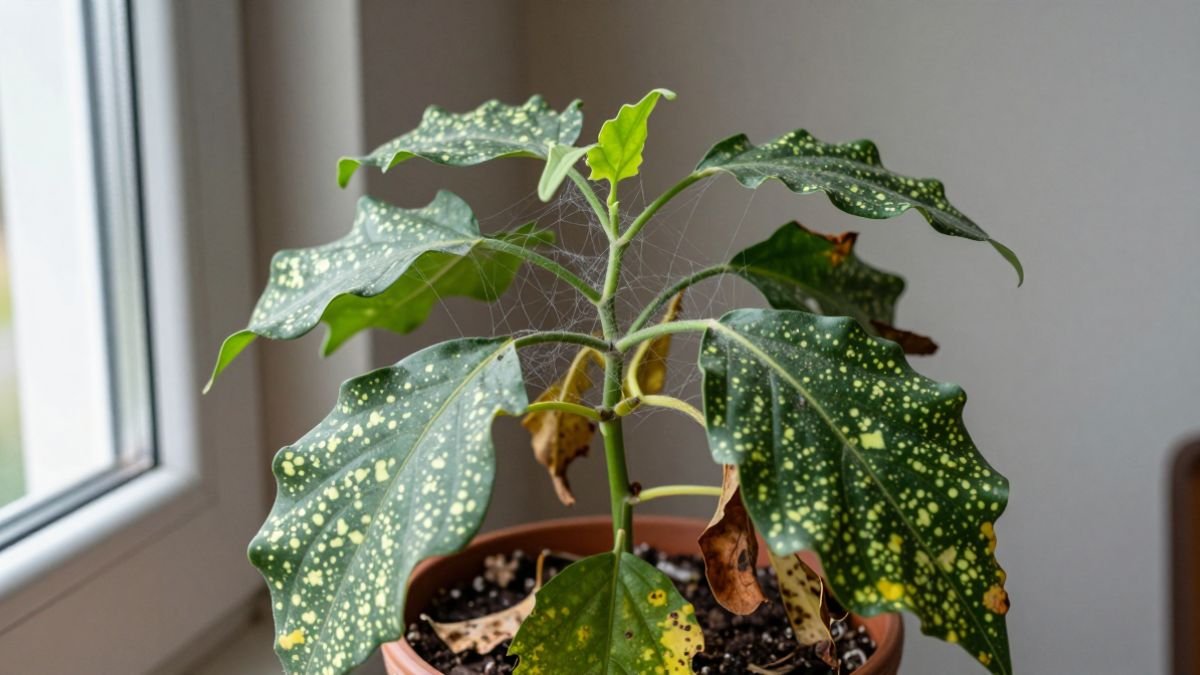
You spray. The mites vanish. Two weeks later, they’re back—thicker than before. If you’ve treated spider mites on your houseplants only to watch them return like a bad habit, you’re not alone. The problem isn’t that the treatment failed. It’s that three invisible mistakes are quietly rebuilding the infestation while you think you’ve won.
Spider mites thrive in conditions most of us create without realizing it: warm rooms, dry air, and a single-treatment mindset. As winter heating kicks into high gear across the United States in December 2025, indoor humidity plummets, and mite populations can double every few days. The good news? Once you understand why they keep coming back, you can break the cycle for good.
The tissue test and where mites actually hide
Before we dive into the mistakes, let’s confirm what you’re dealing with. Grab a white tissue or paper towel and gently wipe the underside of a leaf. If you see faint red, brown, or green streaks, those are crushed mites. You might also spot tiny moving dots or delicate webbing in leaf joints and along stems.
Here’s the catch: spider mites don’t just live on the tops of leaves. They colonize undersides, stems, leaf axils, and even the soil surface. Eggs are nearly invisible and can survive treatments that kill adults. Missing even one hiding spot means the next generation is already waiting.
Check your plant thoroughly:
- Flip every leaf and inspect the underside
- Examine where leaves meet stems
- Look at new growth—mites love tender tissue
- Check neighboring plants within three feet
If you skip this step, you’re treating blind.

Mistake #1: Treating once and calling it done
This is the biggest reason infestations explode after you think you’ve won. Spider mite eggs hatch in 3 to 5 days, and most sprays don’t kill eggs. When you treat once, you knock out adults and nymphs, but the eggs survive. A few days later, a fresh wave hatches into a mite-friendly environment with zero competition and plenty of food.
The fix is simple but non-negotiable: treat every 3 to 5 days for at least two weeks. That means a minimum of three treatments. Mark it on your calendar. Set phone reminders. This isn’t overkill—it’s the only way to catch newly hatched mites before they mature and lay more eggs.
Most people treat once, see improvement, and move on. By day ten, the population has rebounded, and the cycle starts over.
Mistake #2: Not isolating the infested plant
Spider mites are travelers. They don’t fly, but they crawl from plant to plant, hitch rides on your hands, and drift on air currents. If you treat one plant but leave it next to healthy ones, you’re just spreading the problem.
As soon as you spot mites:
- Move the infested plant to a separate room or bathroom
- Inspect every plant that was nearby
- Wash your hands after handling infected plants
- Avoid placing treated plants back into a group until you’ve completed the full treatment cycle and seen two weeks of clean tissue tests
Isolation isn’t dramatic—it’s damage control. One untreated plant can reinfect an entire collection in under a week.

Mistake #3: Ignoring humidity and airflow
Spider mites hate humidity. They thrive in dry, stagnant air—exactly what most homes offer in winter. Central heating, closed windows, and poor airflow create a mite paradise. If your indoor humidity sits below 40%, you’re rolling out the welcome mat.
You can spray all you want, but if the environment stays mite-friendly, they’ll keep coming back. Here’s how to shift the odds:
- Raise humidity around plants. Use a humidifier, group plants together, or place them on pebble trays filled with water. Aim for 50% to 60% humidity if possible.
- Improve airflow. A small fan on low speed helps. Mites prefer still air.
- Lower the temperature slightly. Mites reproduce faster in warm rooms. Dropping the thermostat a couple of degrees can slow them down.
These tweaks don’t replace treatment, but they make your plants far less hospitable to mites long-term.
The rinse and wipe routine that actually works
Before you reach for any spray, start with physical removal. It’s old-school, but it works.
Take your plant to the sink or shower. Spray down every leaf—top and bottom—with lukewarm water. Use your fingers or a soft cloth to gently wipe the undersides. This dislodges mites, eggs, and webbing. For sturdy plants, a firm spray is fine. For delicate ones, be gentle but thorough.
Do this every 3 to 5 days alongside your treatment. It’s tedious, but it’s one of the most effective ways to reduce population pressure.

Safe sprays and the repetition schedule
Now for the treatment itself. You have several options, and the key is repetition, not strength.
Insecticidal soap: Effective and safe for most houseplants. Spray until leaves drip, covering every surface. Reapply every 3 to 5 days.
Neem oil: Works as both a killer and a deterrent. Mix according to label directions (usually 1 to 2 tablespoons per quart of water). Spray in the evening to avoid leaf burn. Repeat every 5 to 7 days.
Horticultural oil: Smothers mites and eggs. Apply thoroughly. Reapply every 5 to 7 days.
Isopropyl alcohol solution: Mix 1 part 70% rubbing alcohol with 3 parts water. Spray or wipe. Test on one leaf first. Repeat every 3 days.
Whichever you choose, stick to the schedule. Write it down. Three treatments minimum, spaced 3 to 5 days apart. If you see new damage or mites after two weeks, extend the schedule.
Your 14-day follow-up checklist
After your final treatment, don’t assume you’re done. Mites are sneaky. Use this checklist to confirm you’ve broken the cycle:
- Day 1 to 3: Perform first treatment. Isolate plant. Rinse and wipe.
- Day 4 to 6: Second treatment. Check tissue test. Inspect neighboring plants.
- Day 7 to 9: Third treatment. Wipe leaves again. Monitor humidity.
- Day 10 to 14: Watch closely. Tissue test every other day. If clean, cautiously reintroduce to other plants.
- Day 14+: Continue weekly tissue tests for a month. Keep humidity elevated.
If you see mites again during this window, restart the treatment cycle. It’s frustrating, but catching a rebound early prevents a full-blown explosion.

Breaking the cycle for good
Spider mites aren’t unbeatable. They just require a shift in strategy—from one-and-done spraying to a disciplined, multi-step approach. Treat every 3 to 5 days, isolate infected plants, and fix the environment that invited them in the first place.
The plants that bounce back fastest are the ones whose owners commit to the full cycle. Mark your calendar. Set your reminders. Check your tissue. And remember: the goal isn’t perfection—it’s persistence. When you treat the cause, not just the symptom, mites lose their foothold for good.