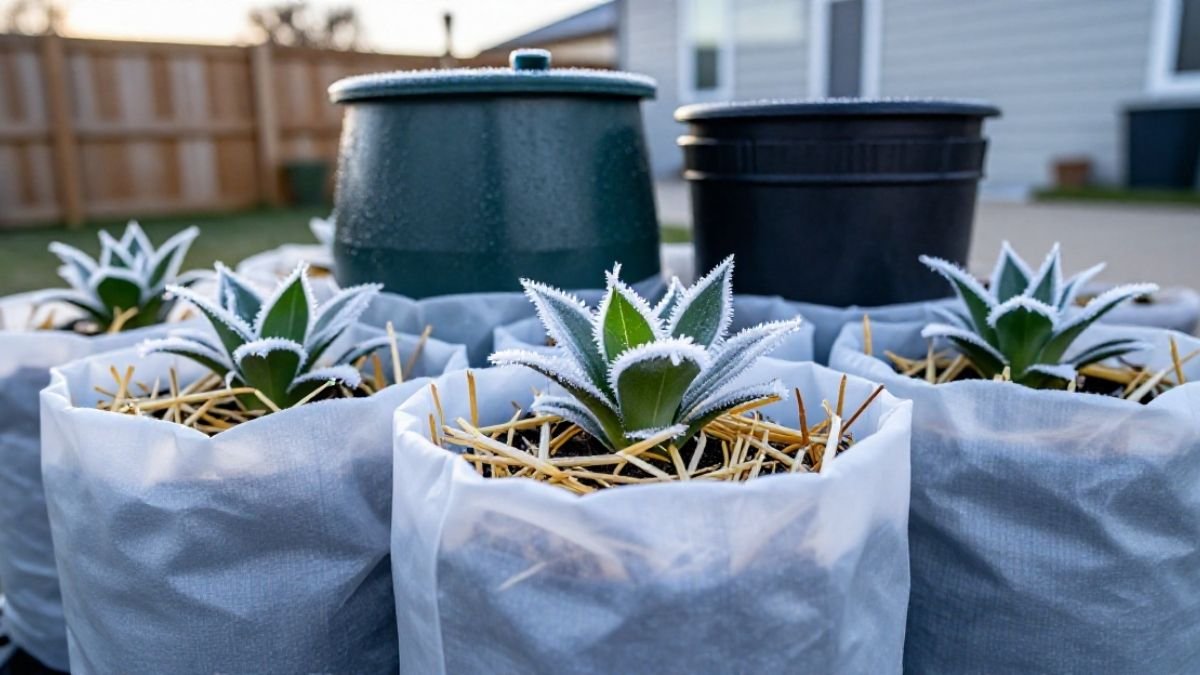
Every winter many people rush out on the first cold night, throwing plastic bags and old blankets over plant. In the morning some pots are fine, others are black and mushy, and nobody really knows why.
Winters in 2026 are more unpredictable in many places. You can get a week of mild rain followed by a sudden hard frost. That swing is what quietly kills a lot of plants, not just one very cold night. To protect plants properly it helps to understand what frost actually does and where common routines go wrong.
What frost really does to plants
Frost does not just sit on the leaves. Cold pulls water out of plant cells, then ice crystals form and tear those cells. The worst damage often happens when temperatures bounce above and below zero again and again, especially for plants in small pots.
Three things matter most:

- how cold it gets
- how long it stays that cold
- whether roots are insulated or exposed in thin containers
What actually works in 2026 style winters
With today’s freeze and thaw patterns, the goal is flexible protection that you can add and remove easily.
Use breathable covers
Choose light frost fleece, old cotton sheets or breathable non woven fabric. These trap a thin layer of air around the plant while still letting moisture escape.
- Drape covers loosely over plants.
- Make sure the fabric reaches the ground so it traps ground heat.
- Pin or weigh down the edges so cold air does not blow in underneath.
Protect roots first
In a small home garden or balcony, start with pots.

- Move pots close to the house wall where nights are slightly warmer.
- Group pots together so they share warmth.
- Wrap containers with cardboard, bubble wrap or thick newspaper, then a layer of plastic on the outside only.
- Lift pots off bare stone with wooden blocks or pieces of polystyrene to stop cold sinking in from below.
Water with care
A well watered plant tolerates cold better than a dry one, but timing matters.
- Water in the morning on cold days so excess moisture can drain before night.
- Keep soil just moist, not soggy.
- In long cold spells reduce watering so roots do not sit in ice.
Use shade against the morning sun
Hard frost followed by bright early sun causes fast thawing and extra cell damage. If a plant is in a spot that gets strong morning light, add a simple screen during cold nights:
- a piece of cardboard
- a garden chair with a cloth over it
- a moveable panel or shutter
This reduces sudden temperature jumps when the sun comes up.
A simple plan for each frost warning
When the weather app shows a risk of frost in 2026, follow the same small routine.
- Check which plants are truly frost tender and prioritise those.
- Move vulnerable pots against a wall and off the ground.
- Wrap containers if a long cold spell is coming.
- Add breathable covers before evening, remove them again when the day warms.
- Watch the forecast for several days, not just one night, because repeat frosts are often worse than a single low point.
Done this way, frost protection stops being a panicked dash with random blankets. It becomes a calm little checklist that keeps roots alive even in strange winters.