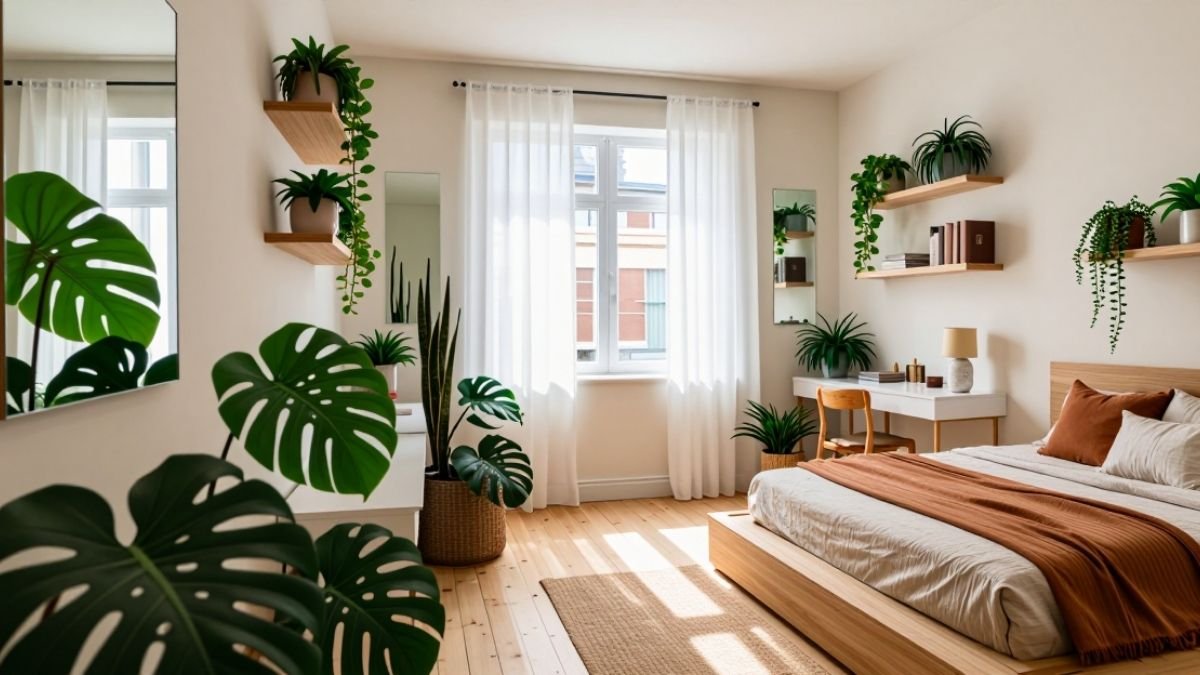
Picture this: You walk into your apartment and it feels like a botanical garden. Lush leaves cascade from shelves. Your fiddle leaf fig actually has new growth. Your neighbor asks if you hired a plant stylist.
But here’s the secret—you didn’t become a horticulture expert overnight. You just learned a few clever shortcuts that make plants want to thrive, even in a dim studio with questionable air circulation.
Let’s be honest. Most of us kill plants not because we’re bad at gardening, but because traditional advice assumes we have a greenhouse, unlimited time, and zero forgetfulness. We don’t.
These 17 hacks work for real life—small spaces, unpredictable schedules, and that one corner where sunlight goes to die.
Why everyone’s suddenly obsessed with indoor plants
The indoor gardening trend exploded because we’re all craving something alive in our living spaces. Search interest has tripled since 2020, and it’s not slowing down. People want greenery that improves air quality, reduces stress, and looks incredible on camera.
But the gap between aspiration and reality? That’s where most people give up.
Light hacks that actually work
The mirror trick: Position a mirror opposite your brightest window. It bounces light directly onto plants that would otherwise sit in shadow. This single change can double the effective light in a room.
Strategic placement matters more than you think. Plants don’t need to sit directly in windows. They need consistent light. A spot three feet from an east-facing window often works better than a south-facing sill where leaves get scorched by afternoon sun.
Rotate weekly. Every Sunday, give each pot a quarter turn. This prevents lopsided growth and ensures all sides get equal light exposure. Set a phone reminder—it takes 30 seconds.
Watering shortcuts for busy (or forgetful) people
Here’s the mistake that kills most houseplants: overwatering, not underwatering. We water on a schedule instead of checking soil moisture first.
The finger test is your best friend. Stick your index finger into the soil up to the second knuckle. Dry? Water thoroughly until it drains from the bottom. Still moist? Walk away.
Bottom watering changes everything. Place your pot in a bowl of water for 20 minutes. The soil absorbs exactly what it needs through drainage holes. No more soggy roots or crusty topsoil.
Group plants with similar water needs together. Your succulents and ferns shouldn’t be roommates.
Soil and repotting secrets
Standard potting soil is too dense for most houseplants. Mix in perlite or orchid bark—about 30% of your total volume. This creates air pockets that prevent root rot and help water drain properly.
You don’t need to repot every year. Most plants only need fresh soil every 18-24 months. The sign? Roots growing out of drainage holes or water sitting on top without absorbing.
When you do repot, only go up one pot size. Jumping from a 4-inch to an 8-inch pot leaves too much wet soil around roots, which invites disease.
The lazy gardener’s plant list
Some plants practically grow themselves:
Pothos survives neglect better than attention. Low light? Fine. Forgot to water for two weeks? It’ll forgive you.
Snake plants are indestructible. They tolerate darkness, drought, and disinterest. Perfect for bathrooms or bedrooms.
ZZ plants have thick rhizomes that store water like camels. They’d rather you forget them than fuss over them.
Spider plants produce baby plantlets you can propagate and gift. They filter air toxins and thrive in hanging baskets where they’re out of the way.

Accessibility tips for older plant lovers
Gardening shouldn’t require bending, lifting, or struggling. Plant stands and tiered shelving bring greenery to eye level and waist height. No more crouching to check moisture or straining your back during repotting.
Look for tools with ergonomic grips. Watering cans with longer spouts let you reach hanging baskets without a step stool. Lightweight plastic pots weigh significantly less than ceramic when you need to move things around.
Self-watering planters are worth the investment if mobility or memory is a concern. They have built-in reservoirs that feed roots gradually over one to two weeks.
Quick troubleshooting guide
Yellow leaves? Usually overwatering. Check soil moisture and adjust your schedule.
Brown, crispy tips? Low humidity or inconsistent watering. Mist leaves occasionally or group plants together to create a micro-climate.
Leggy, stretched stems? Not enough light. Move closer to a window or add a grow light.
No new growth? Plants go dormant in winter. It’s normal. Resume fertilizing in spring.
Pests? Wipe leaves with diluted dish soap weekly. Check undersides where bugs hide.
You don’t need a green thumb to create an indoor jungle. You just need systems that work with your lifestyle instead of against it. Start with one or two foolproof plants, apply these hacks, and watch what happens.
Your apartment is about to feel a whole lot more alive.