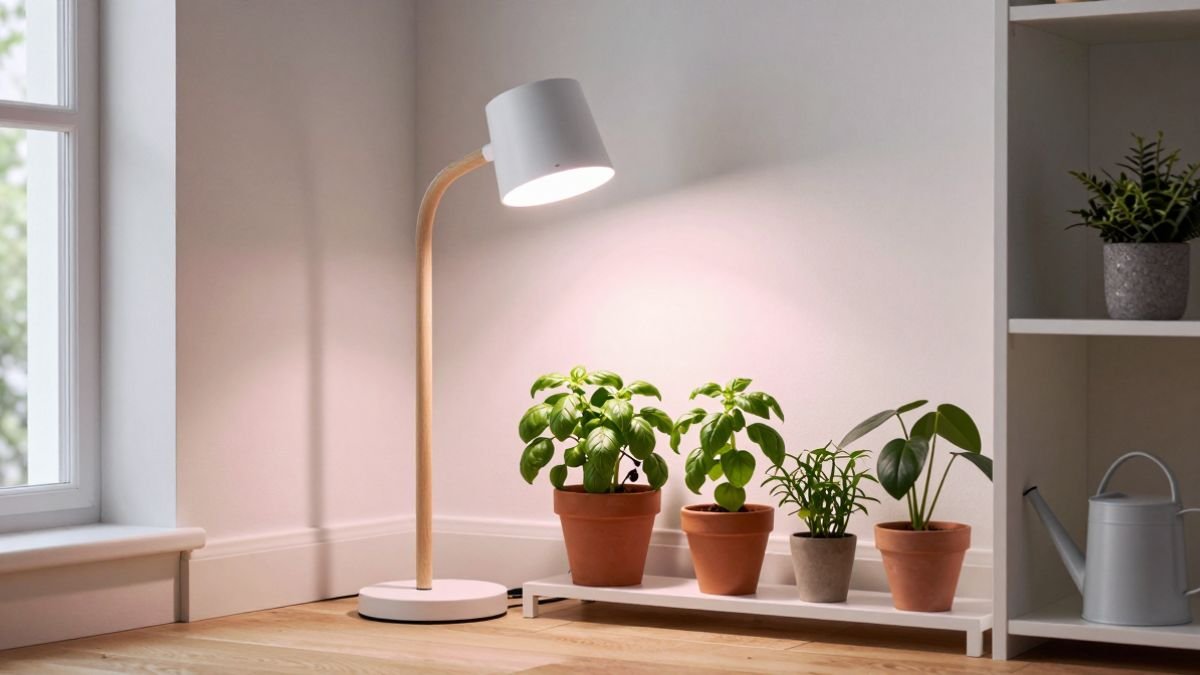
Not all IKEA plant lights can keep your houseplants alive. Some are just pretty bulbs that won’t do much more than illuminate your bookshelf.
If you’ve been eyeing IKEA’s affordable grow light options this winter, you’re not alone. Searches for “IKEA grow light” have surged as indoor gardeners look for budget-friendly ways to keep their plants thriving through the darker months. But here’s the catch: not every lamp marketed for plants actually delivers the light spectrum and intensity your green friends need to photosynthesize. Some are decorative at best, leaving your pothos or fiddle leaf fig slowly starving for real light.
This guide will walk you through what separates a true grow light from a bright impostor, how to test what you already own, and how to set up IKEA’s plant-friendly options the right way.
What actually makes a plant light work
Plants don’t just need brightness—they need the right wavelengths at the right intensity. Photosynthesis relies heavily on blue light (400–500 nm) and red light (600–700 nm). Blue light promotes compact, leafy growth. Red light drives flowering and fruiting.
A true grow light delivers a balanced spectrum that mimics natural sunlight, or at least emphasizes those blue and red zones. Standard household LEDs? They’re optimized for human eyes, not chlorophyll. They often skimp on red wavelengths and may not be bright enough at plant-level distances.
Intensity matters just as much as color. Light is measured in PPFD (photosynthetic photon flux density), but most home growers don’t own a quantum sensor. A simpler rule: low-light houseplants need roughly 100–200 foot-candles, medium-light plants need 200–500, and high-light plants need 500+. If your lamp can’t deliver that at the distance you’re using it, your plant will stretch, pale, or stall.
IKEA’s dedicated grow lights—like the VÄXER series—use full-spectrum LEDs designed for plants. Their standard desk lamps and pendant lights? Not so much.

Quick at-home tests to check if your light is strong enough
You don’t need expensive tools to get a rough sense of whether your setup is working.
The shadow test: Hold your hand 12 inches below the light, at the same height as your plant’s canopy. If the shadow is sharp and dark, the light is reasonably intense. If it’s faint or blurry, the light is probably too weak.
The phone lux meter: Download a free lux meter app (iOS or Android). Hold your phone at plant height, facing the light. For reference:
- 1,000–2,000 lux: Low-light plants (pothos, snake plant)
- 2,000–5,000 lux: Medium-light plants (monstera, philodendron)
- 5,000–10,000+ lux: High-light plants (succulents, herbs, fruiting plants)
These numbers aren’t perfect—lux measures light for human eyes, not plant photosynthesis—but they give you a ballpark.
The plant response test: Run your light for 12–14 hours a day for two weeks. If new growth is compact, vibrant, and the plant isn’t leaning toward a window, you’re in good shape. If leaves are pale, leggy, or dropping, your light isn’t cutting it.
Common pitfalls that sabotage your setup
Even a good grow light can fail if you’re making one of these mistakes.
Too far away: Light intensity drops fast with distance. A lamp that’s perfect at 6 inches might be useless at 24 inches. Most IKEA grow lights work best 6–12 inches from the canopy. Measure from the light source to the top leaves, not the pot.
Too dim for the plant type: A single VÄXER bulb might keep a pothos happy, but it won’t sustain a tomato seedling or a fiddle leaf fig. Match the light intensity to your plant’s natural habitat. Rainforest understory plants are forgiving. Desert and fruiting plants are not.
Wrong color temperature: If you grabbed a random IKEA bulb, check the packaging. Bulbs labeled “warm white” (2700K) are heavy on red and yellow, but weak on blue. “Cool white” or “daylight” (5000K+) bulbs are closer to what plants need, but still not ideal. IKEA’s VÄXER bulbs are tuned to a plant-friendly spectrum.
Inconsistent timing: Plants need a predictable day/night cycle. Leaving the light on 24/7 or forgetting to turn it on for days will stress them. Use a plug-in timer (IKEA sells affordable ones) to automate 12–16 hours of light per day.
Heat damage: LEDs run cooler than old-school bulbs, but they still generate heat. If your lamp has no ventilation and sits too close, leaves can scorch. Leave a little breathing room and check for crispy leaf edges.

How to set up IKEA grow lights safely and effectively
Here’s a simple, foolproof setup for most houseplants.
Choose the right product: IKEA’s VÄXER LED grow light (available as a bulb or a panel) is your best bet. It’s designed for plants, affordable, and fits standard fixtures. If you’re using a desk lamp, make sure it can handle the wattage and has an adjustable arm.
Position the light correctly: Start with the light 8–10 inches above the plant’s tallest leaves. Adjust based on plant response. If leaves bleach or curl, raise the light. If growth is slow or leggy, lower it.
Set a timer: Plug your lamp into a timer and set it for 12–14 hours on, 10–12 hours off. This mimics a natural day and keeps your plant’s internal clock happy.
Monitor and adjust: Check your plants weekly. New growth should be vibrant and compact. If you see stretching, increase intensity or duration. If you see scorching, raise the light or reduce hours.
Combine with natural light when possible: Grow lights work best as a supplement, not a replacement. If your plant sits near a window, even a dim one, the extra natural light will help. Just avoid placing the lamp where it creates harsh shadows or blocks window light.
Which IKEA lights are worth it—and which aren’t
IKEA’s VÄXER series (bulbs, strips, and panels) are legitimate grow lights. They’re affordable, energy-efficient, and deliver a plant-friendly spectrum. If you’re serious about keeping plants alive indoors, start here.
Their standard RYET, LEDARE, or SOLHETTA bulbs? These are general-purpose LEDs. They’ll keep a low-light plant from dying, but they won’t fuel robust growth. Don’t expect miracles.
Decorative lamps like the RANARP or HEKTAR can hold a VÄXER bulb, turning them into functional grow light fixtures. Just make sure the fixture allows you to position the bulb close enough to your plants.

What to do next
If you already own an IKEA lamp, test it using the shadow or lux method. If it’s too weak, swap in a VÄXER bulb or move the plant closer. If you’re shopping, grab a VÄXER bulb and a simple clamp lamp or adjustable desk fixture.
Set up your timer, position the light, and give your plants two weeks to respond. You’ll know quickly whether your setup is working.
Winter doesn’t have to mean sad, stretching houseplants. With the right light—and the right distance—you can keep your indoor jungle thriving until spring.