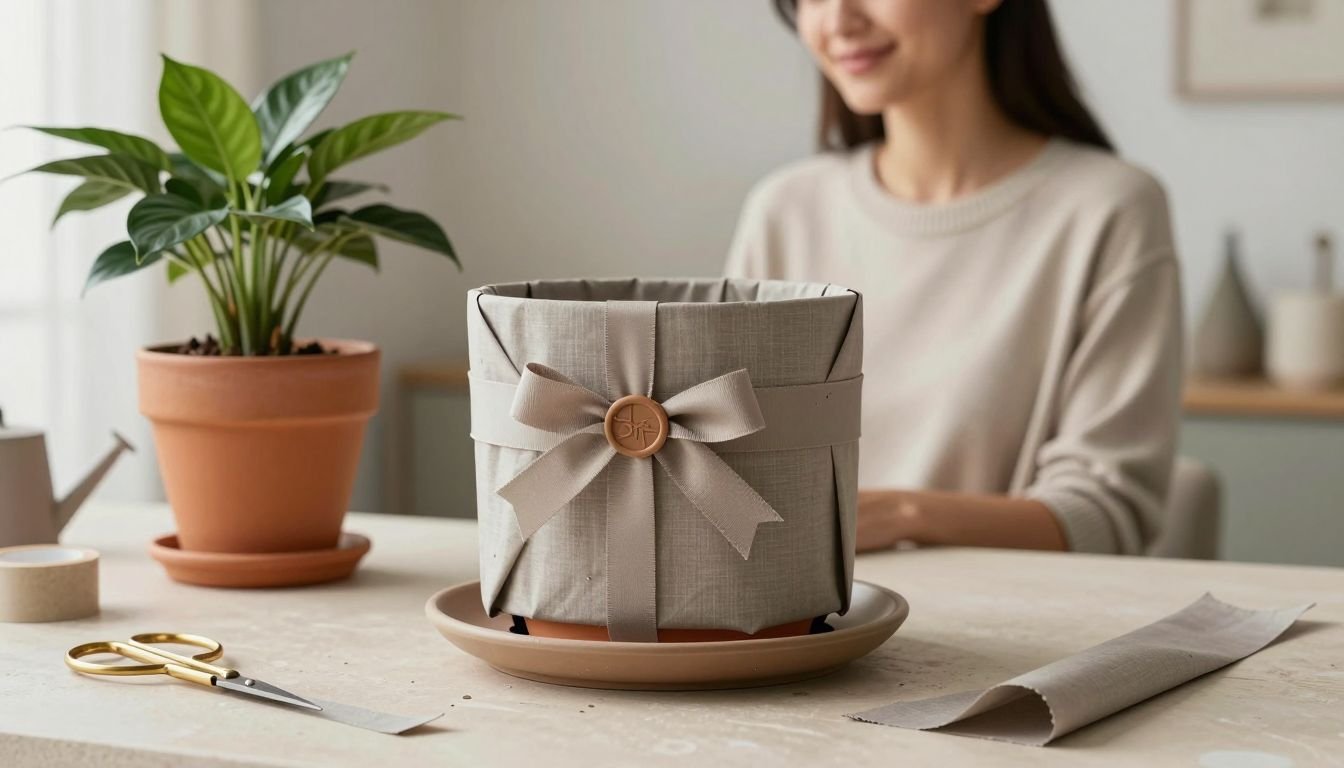
You’ve seen the gorgeous plant gifts on Instagram—lush greenery nestled in elegant wrapping that looks like it came from a boutique florist. But here’s what nobody tells you: many of those beautiful wraps are silently drowning the roots. That kraft paper tied with twine? It’s trapping moisture against the pot. That snug fabric sleeve? It’s blocking drainage holes. The result is root rot, yellowing leaves, and a plant that dies within weeks—no matter how carefully you water.
The good news? You can wrap a pot so it looks expensive and keeps your plant healthy. It’s not about skipping the wrap—it’s about doing it the drainage-safe way. Whether you’re gifting a plant this holiday season or refreshing your own collection, here’s how to make it look stunning without sacrificing function.
Choose your wrap style (and understand the drainage trade-offs)
Not all wraps are created equal. Some materials wick moisture, others trap it, and a few do nothing at all. Here’s what you need to know.
Kraft paper and butcher paper are the most popular for a minimalist, modern look. They’re inexpensive, easy to fold, and photograph beautifully. The problem? Paper absorbs water. If it sits directly against a ceramic or plastic pot with no gap, every time you water, the paper soaks it up and holds it against the pot. That creates a humid microclimate perfect for fungus gnats and root rot.
Fabric wraps—linen, burlap, or cotton—give a cozy, textured look. They’re reusable and feel more sustainable. But like paper, fabric wicks moisture. If the pot’s drainage holes press directly into the fabric, water will seep into it and stay damp for days.
Baskets and woven planters are the safest option if you do them right. They allow airflow, they’re sturdy, and they hide plastic nursery pots beautifully. The catch: if you nestle the pot directly into the basket with no liner or gap, water can pool at the bottom unseen.
Cellophane and plastic sleeves are what florists use for transport. They’re waterproof, which sounds good—but that also means they trap every drop. Unless you remove them after delivery, they turn your pot into a swamp.
The takeaway? Every wrap style can work, but only if you build in drainage insurance.

The drainage-safe method: liner plus gap
This is the non-negotiable technique that makes any wrap safe. It takes 30 seconds and costs almost nothing.
Start with your potted plant. If it’s in a plastic nursery pot, leave it there—don’t repot just for wrapping. If it’s in a ceramic pot with a drainage hole, perfect. If it’s in a decorative pot without a hole, you’ll need to add a liner (more on that below).
Step one: Place a shallow dish, saucer, or even a jar lid under the pot. This catches overflow and creates a small gap between the pot and whatever surface it’s sitting on.
Step two: Wrap the pot loosely. Whether you’re using paper, fabric, or a basket, leave the bottom open or loosely gathered—never sealed. The goal is to let air circulate and let excess water escape.
Step three (critical for baskets): If you’re using a basket, place the potted plant inside, then tuck a piece of plastic wrap or a small plastic bag around the saucer only—not around the whole pot. This keeps the basket dry without trapping moisture against the roots.
For fabric or paper wraps, fold the material so it stops just below the pot’s rim. Secure it with twine, ribbon, or a rubber band hidden under the fold. The drainage holes stay exposed at the bottom, and the wrap stays dry because it’s not touching the wet zone.
This method works for every wrap style. It’s invisible, it’s fast, and it prevents 90% of the “pretty wrap, dead plant” disasters.
Three looks: minimalist, cozy holiday, and modern luxe
Now that you know the safe method, here’s how to style it.
Minimalist (kraft paper + twine): Cut a square of kraft paper large enough to wrap halfway up the pot. Center the pot, gather the paper around the sides, and secure it with natural twine or black ribbon. Leave the top edge raw and slightly crumpled for that effortless, editorial look. Add a sprig of dried eucalyptus or a small tag if it’s a gift.
Cozy holiday (fabric + cinnamon sticks): Use a square of linen or burlap. Wrap it loosely around the pot, tie it with wide grosgrain ribbon in a deep red or forest green, and tuck in a cinnamon stick or a small pinecone. The texture makes it feel warm and tactile—perfect for December gifting.
Modern luxe (basket + leather tag): Choose a woven seagrass or rattan basket one size larger than your pot. Drop the pot inside (with saucer and plastic barrier), then add a leather luggage tag or a brass plant marker tucked into the weave. The contrast between natural fiber and metal gives it a high-end, curated feel.
All three looks take under five minutes and cost less than $10 in materials.

Quick fixes for already-wrapped pots
Maybe you received a beautifully wrapped plant as a gift, or you wrapped one weeks ago and just realized it’s sitting in a puddle. Here’s how to rescue it without ruining the look.
If the wrap is damp: Remove the plant, let the wrap dry completely, then rewrap using the liner-plus-gap method. If the wrap is stained or torn, replace it—it’s worth the $2 for fresh paper.
If water is pooling inside a basket: Lift the pot out, dump the water, and add a layer of pebbles or a small plastic tray at the bottom of the basket before putting the pot back. This raises the pot above any future overflow.
If the pot has no drainage hole: You have two options. One, repot the plant into a nursery pot with drainage, then place that inside the decorative pot using the saucer method. Two, water very sparingly—only when the top two inches of soil are dry—and tip the pot to drain excess water after every watering. The first option is safer.
Gift-ready checklist for plant presents
If you’re wrapping a plant to give as a gift, run through this checklist before you hand it over.
- Drainage hole? If the pot doesn’t have one, include a small card explaining the watering technique or swap the pot for one that drains.
- Saucer included? Tuck a matching saucer inside the wrap or basket so the recipient doesn’t have to hunt for one.
- Care tag attached? A small tag with the plant’s name, light needs, and watering frequency makes you look thoughtful and saves the plant’s life.
- Wrap is loose at the bottom? Double-check that the wrap isn’t sealed or tucked under the pot.
- Transport bag? If you’re traveling with the plant, use a tote bag or box to keep it upright—don’t rely on the wrap for structure.
One last tip: if you’re wrapping multiple plants as gifts, prep them all at once. Set up a little assembly line with your materials, and you can wrap a dozen pots in under an hour.

The wrap that works as hard as it looks
A well-wrapped plant should look expensive and stay healthy for months. The secret isn’t choosing between beauty and function—it’s knowing the one technique (liner plus gap) that gives you both. Whether you’re wrapping a monstera for a housewarming, a succulent for a coworker, or a fiddle leaf fig for your own living room, this method works every time.
Start with what you have: kraft paper from a package, a basket from the thrift store, or fabric scraps from an old project. Add a saucer, leave the bottom loose, and finish with something simple—twine, ribbon, or a sprig of greenery. The plant gets airflow and drainage. The wrap gets to look gorgeous. And you get to give (or keep) a gift that actually thrives.
Your next plant wrap is 30 seconds and one saucer away from being both stunning and safe. Make it count.