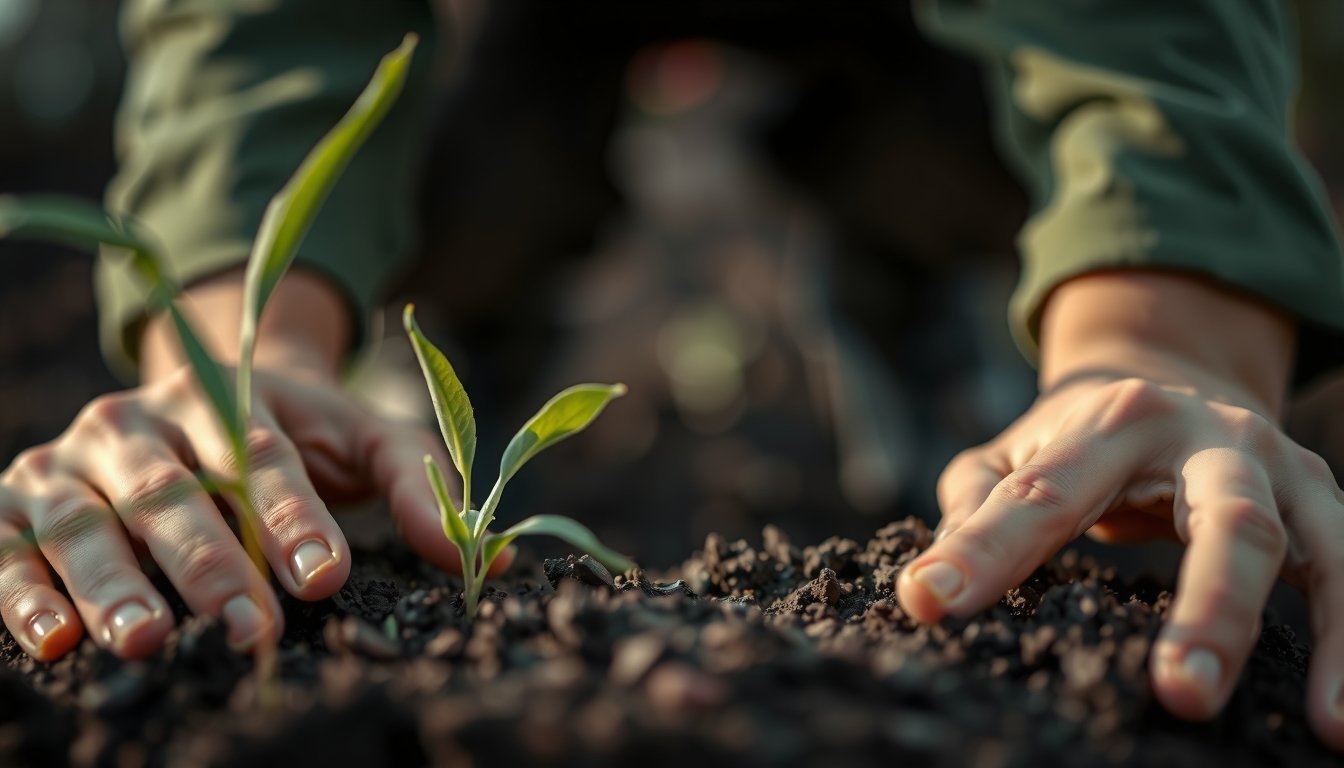
To grow a garden is not to arrange pretty things in dirt. It’s to enter into a pact with something wild, something that will test you, seduce you, and—if you let it—transform you completely.
Every seed you press into soil is a whispered promise. Every stem that breaks through darkness carries the weight of your attention, your doubt, your hope. A garden is never just about what grows above ground. It’s about what happens beneath—the silent, urgent conversations between root and earth, the slow violence of germination, the way fungi thread through compost like lovers’ fingers interlacing in the dark.
The Soil Knows Your Secrets
Before you plant a single seed, you must seduce the soil. Not with chemicals, not with force, but with patience and richness. A garden begins with what you feed it—compost dark as midnight, potting mix that crumbles like brown sugar between your fingers, the slow alchemy of decay becoming life.
Your soil should smell like rain and rot and possibility. It should feel alive when you sink your hands into it, cool and yielding. This is where everything begins: in the darkness, in the waiting, in the transformation of what was once living into what will live again.
Mix compost into your garden bed until the earth turns supple. If you’re container gardening on a balcony or apartment windowsill, choose a potting mix that holds moisture without drowning roots. The difference between a garden that merely survives and one that thrives often lives in these invisible choices—the texture of soil, the balance of drainage and retention, the whisper of nutrients waiting to be claimed.

Seeds: The Smallest Acts of Faith
To grow a garden from seed is to believe in something you cannot see. You press these hard, dry promises into soil and wait. Some will germinate in days, pushing green fists through the surface with shocking urgency. Others take weeks, testing your faith, making you wonder if anything lives beneath at all.
Start with what speaks to you. Herbs like basil carry summer in their leaves—crush one between your fingers and the scent alone will transport you. Lettuce grows fast and forgiving, perfect for windowsill gardens where space is precious. Tomatoes demand more—deeper containers, stronger light, patient pruning—but they reward you with fruit that tastes like sunlight condensed into flesh.
For flowers, nothing matches the drama of a rose slowly unfurling, or the architectural strangeness of an orchid bloom. Even succulents, those desert survivors, have their own slow-motion sensuality—the way they plump with water, the unexpected shock of their flowers.
Watering: The Most Intimate Act
Watering is not a chore. It’s a conversation. You learn to read thirst in the slight droop of a leaf, in soil that’s pulled away from the container’s edge, in the weight of a pot lifted in your hands.
Too much water and roots rot in the darkness, suffocating in their own excess. Too little and stems turn brittle, leaves crisp at the edges like old paper. The balance lives somewhere between—in soil that stays moist but never sodden, in containers with drainage holes that let excess escape, in the morning ritual of checking, touching, knowing.
For indoor plants and houseplants, this becomes even more crucial. Without rain to guide them, they depend entirely on your attention. Stick your finger two inches into the soil. If it’s dry, water deeply until it runs from the drainage holes. If it’s still moist, wait. Let the plant breathe.

The Pruning, The Propagation, The Letting Go
A garden teaches you that growth requires loss. You must prune to encourage fullness, pinching back basil before it flowers, deadheading roses to force new blooms, cutting away what’s diseased or dying to protect what remains.
This is where gardening becomes meditation, becomes therapy, becomes a practice in accepting impermanence. Not every seedling will thrive. Not every transplant will take. You will lose plants to pests—aphids clustering like dark secrets on new growth, spider mites spinning their invisible webs, fungus gnats rising from overwatered soil like tiny ghosts.
You will battle root rot and mildew. You will make mistakes with fertilizer, burning tender roots with too much eagerness. You will forget to water, or water too much, or repot too late.
And still, you will try again.
Because propagation—the art of taking cuttings and rooting them in water or soil—teaches you that even loss can become abundance. One plant becomes two becomes ten. You learn to see potential in every stem, every offset, every runner reaching across the soil.
The Garden As Mirror
To grow a garden, whether it’s a sprawling vegetable plot or a collection of houseplants on an apartment windowsill, is to grow yourself. You learn patience in germination, resilience in the face of pests, acceptance when despite everything, something dies.
You learn that perfection is neither the goal nor the point. The goal is the growing itself—the daily practice of attention, the slow accumulation of knowledge written in your hands, the way you begin to notice everything: the angle of light, the first signs of new growth, the subtle shift in a leaf’s color that signals need.
A garden is never finished. It’s always becoming, always in flux, always teaching you something new about desire and death and the space between. It asks you to show up, day after day, even when nothing seems to be happening, especially when nothing seems to be happening.
Because beneath the soil, in the dark, roots are always reaching. Stems are always pushing toward light. Seeds are always deciding whether to trust you enough to break open and begin.
Begin Now, Begin Small
You don’t need land to grow a garden. You need only the willingness to tend something beyond yourself. Start with one pot on a balcony. Start with basil on a windowsill. Start with a single tomato plant in a container, or a cucumber climbing a trellis, or pepper seedlings reaching toward the sun.
Start with soil in your hands and a seed pressed into darkness and the courage to wait.
The garden is waiting. It’s always been waiting. And it will teach you everything you need to know about growth, if you’re brave enough to let it.