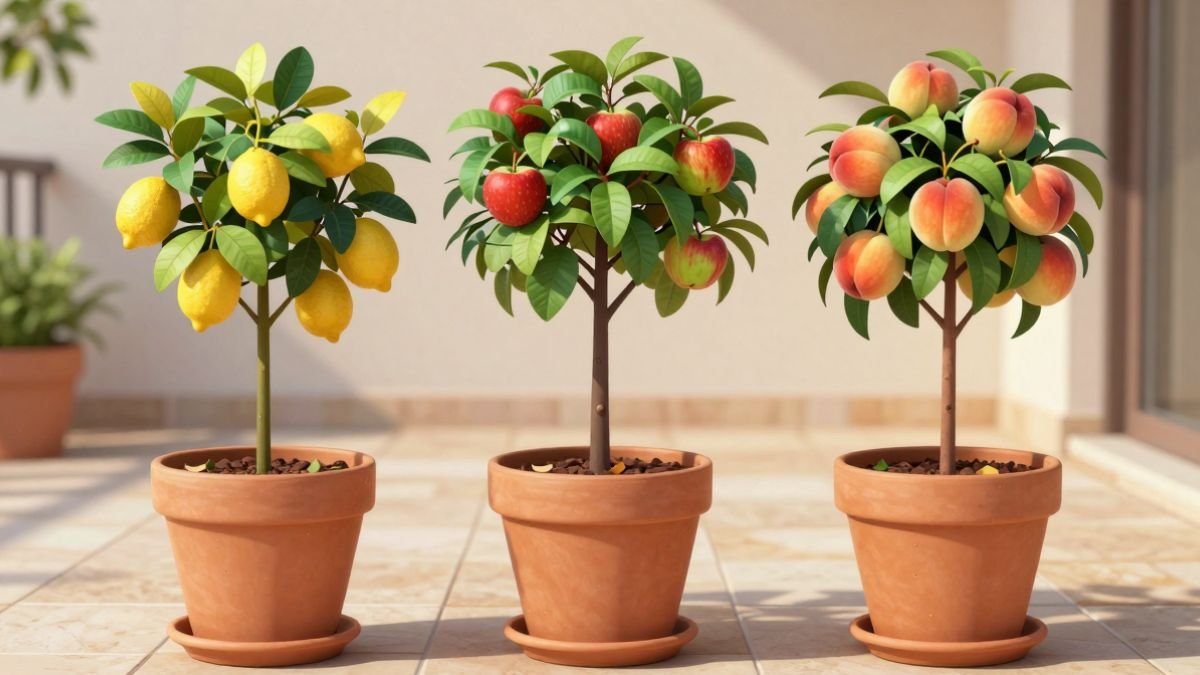
Most container gardeners kill their fruit trees before the first harvest—not from neglect, but from choosing a pot that’s two sizes too small.
You water religiously. You fertilize on schedule. But your dwarf lemon tree hasn’t grown an inch in eight months, and the leaves are yellowing despite your best efforts. The problem isn’t your care routine—it’s the 12-inch pot strangling the roots of a tree that needs at least 20 gallons to thrive.
Container fruit growing has exploded across American patios and balconies, but the single biggest mistake beginners make is underestimating pot size. Get this right, and you’ll harvest bowls of fruit from a sunny corner. Get it wrong, and you’ll spend two years nursing a stunted tree that never produces.
Here’s how to match pot size to tree type, build soil that actually works, and create a maintenance rhythm that turns containers into productive mini-orchards.
Best beginner fruits for pots
Not all fruit trees tolerate container life equally. Some adapt beautifully to restricted roots; others sulk and underperform no matter how large the pot.
Top performers for containers:
- Dwarf citrus (Meyer lemon, Calamondin orange, Key lime): Naturally compact, tolerate pruning, produce heavily indoors or out
- Figs (Petite Negra, Chicago Hardy): Shallow root systems, fruit on new wood, winter-dormant varieties survive cold garages
- Blueberries: Acid-loving shrubs (not trees) that fruit prolifically in 16-inch pots, multiple varieties needed for pollination
- Dwarf peaches and nectarines (Bonanza, Honey Babe): Genetic dwarfs stay under 6 feet, self-pollinating, gorgeous spring bloom
- Strawberries: Technically not trees, but the easiest container fruit—harvest in 60 days from transplant
Avoid these in containers:
- Standard-size trees (even “dwarf” apples on MM.111 rootstock grow too large)
- Cherries (except genetic dwarfs)—most need deep roots and cross-pollination
- Nut trees—root systems too aggressive
The key is matching the tree’s mature size and root habit to container constraints. A tree grafted onto dwarfing rootstock (like M.27 for apples) will stay small genetically, not just because you’re restricting roots.

How to choose pot size by tree type and rootstock
This is where most container gardeners fail. The general rule: go bigger than you think you need.
Minimum pot sizes by tree type:
- Dwarf citrus: 15-gallon pot (18-20 inches diameter) minimum; 20-25 gallons ideal for mature trees
- Figs: 15-20 gallons (figs tolerate root restriction well and fruit better when slightly pot-bound)
- Blueberries: 5 gallons per plant minimum; 10-15 gallons for mature bushes
- Genetic dwarf stone fruits (peach, nectarine): 15-20 gallons minimum
- Dwarf apples on ultra-dwarfing rootstock (M.27, M.9): 20-25 gallons
Pot material matters:
- Terracotta: Breathable, prevents overwatering, but dries out fast in summer heat and cracks in hard freezes
- Plastic/resin: Retains moisture better, lighter for moving, but can overheat roots in direct sun
- Fabric grow bags: Excellent air pruning of roots, prevents circling, but dry out fastest—best for experienced growers
- Glazed ceramic: Beautiful but heavy; ensure drainage holes aren’t blocked by glaze
Drainage is non-negotiable. Every pot needs multiple holes. If your decorative container lacks them, drill them yourself or use it as a cachepot with a functional nursery pot inside.
When to upsize: Plan to repot every 2-3 years, moving up one pot size (3-5 gallons larger). Root-bound trees stop growing and fruiting. If roots circle the drainage holes or the tree dries out within hours of watering, it’s time.
The soil mix that drains but doesn’t dry out instantly
Regular garden soil is death in containers—it compacts, suffocates roots, and drains poorly. Potting mix is too light and dries out in summer heat.
The ideal container fruit tree mix balances drainage with water retention.
Base recipe (by volume):
- 40% quality potting mix (peat or coir-based)
- 30% compost (adds nutrients and moisture retention)
- 20% perlite or pumice (prevents compaction, improves drainage)
- 10% aged bark or coconut coir chips (creates air pockets)
Adjustments by tree type:
- Blueberries: Replace compost with peat moss or sulfur-amended mix (they need pH 4.5-5.5)
- Citrus: Add extra perlite (25-30% total) for faster drainage—citrus hates wet feet
- Figs: Can tolerate heavier mix; reduce perlite to 15%
What to avoid:
- Miracle-Gro moisture-control mixes (hold too much water for woody plants)
- Straight compost (too dense, breaks down too fast)
- Garden soil (compacts, poor drainage)
Pro tip: Mix in slow-release organic fertilizer (like Osmocote or organic fruit tree blend) at planting time. Add mycorrhizal inoculant to help roots access nutrients.
Refresh the top 2-3 inches of soil every spring with fresh compost and a handful of fertilizer—this feeds the tree without full repotting.
Watering and feeding schedule by season
Container trees can’t send roots searching for water—they depend entirely on you.
Watering rules:
- Spring/Summer (active growth): Check daily. Water when the top 2 inches of soil are dry. In peak heat, large trees may need water twice daily.
- Fall: Reduce frequency as growth slows, but don’t let soil fully dry out.
- Winter (dormant): Water sparingly—just enough to keep soil barely moist. Overwatering dormant trees causes root rot.
Signs of trouble:
- Wilting despite moist soil: Root rot or poor drainage
- Leaf edges browning: Underwatering or salt buildup from over-fertilizing
- Yellowing leaves with green veins: Iron deficiency (common in citrus) or overwatering
Feeding schedule:
- Spring (March-May): Apply balanced organic fertilizer (5-5-5 or similar) as new growth emerges. Repeat every 4-6 weeks.
- Summer (June-August): Continue feeding, but switch to lower-nitrogen formula (2-4-4) to encourage fruiting over leafy growth.
- Fall (September-November): Stop fertilizing 6-8 weeks before first expected frost. Late feeding produces tender growth that winter-kills.
- Winter: No fertilizer for dormant trees.
Citrus exception: In frost-free zones, citrus grows year-round. Feed lightly every 6-8 weeks in winter with citrus-specific fertilizer containing micronutrients.
Liquid vs. granular: Liquid fertilizers (fish emulsion, seaweed extract) provide quick boosts. Slow-release granules feed steadily for months. Use both—granules in spring, liquid every 2-3 weeks during active growth.
Winter protection and repotting timeline
Container trees are more vulnerable to cold than in-ground trees—roots freeze faster in above-ground pots.
Winter protection by zone:
- Zones 8-10: Most container fruits can stay outdoors year-round. Wrap pots in burlap during rare freezes to insulate roots.
- Zones 6-7: Move tender trees (citrus, tropical figs) indoors before first frost. Hardy fruits (blueberries, some figs) can overwinter outdoors against a south-facing wall with pot insulation.
- Zones 5 and colder: Plan to move all container fruit trees to unheated garage, basement, or cold frame. Dormant trees tolerate 20-45°F through winter.
Indoor overwintering tips:
- Choose the coolest bright spot (40-50°F ideal for dormant deciduous trees)
- Reduce watering to monthly checks
- Don’t fertilize
- Watch for spider mites (common on indoor citrus)
Repotting timeline:
- Best time: Late winter/early spring, just before growth resumes
- Frequency: Every 2-3 years for young trees; every 4-5 years once mature
- Process: Remove tree, trim circling roots, refresh soil, move up one pot size or return to same pot with fresh mix
Root pruning: Mature trees that can’t go into larger pots need root pruning every 3-4 years. Remove tree, trim outer 2 inches of root ball, replant in same pot with fresh soil. This resets growth and prevents decline.
Your first harvest starts with the right pot
Container fruit growing isn’t harder than in-ground planting—it’s just more precise. You control every variable, which means small mistakes magnify quickly, but correct choices produce remarkable results.
Start with one tree. Choose a beginner-friendly variety, invest in a pot that’s larger than recommended (you won’t regret the extra volume), and build proper soil from the start.
This week, measure your sunniest outdoor space. Six hours of direct sun minimum. Then pick your tree. By this time next year, you’ll be harvesting fruit you grew in 20 gallons of soil on a balcony.
The best time to plant a container fruit tree was three years ago. The second-best time is this weekend.