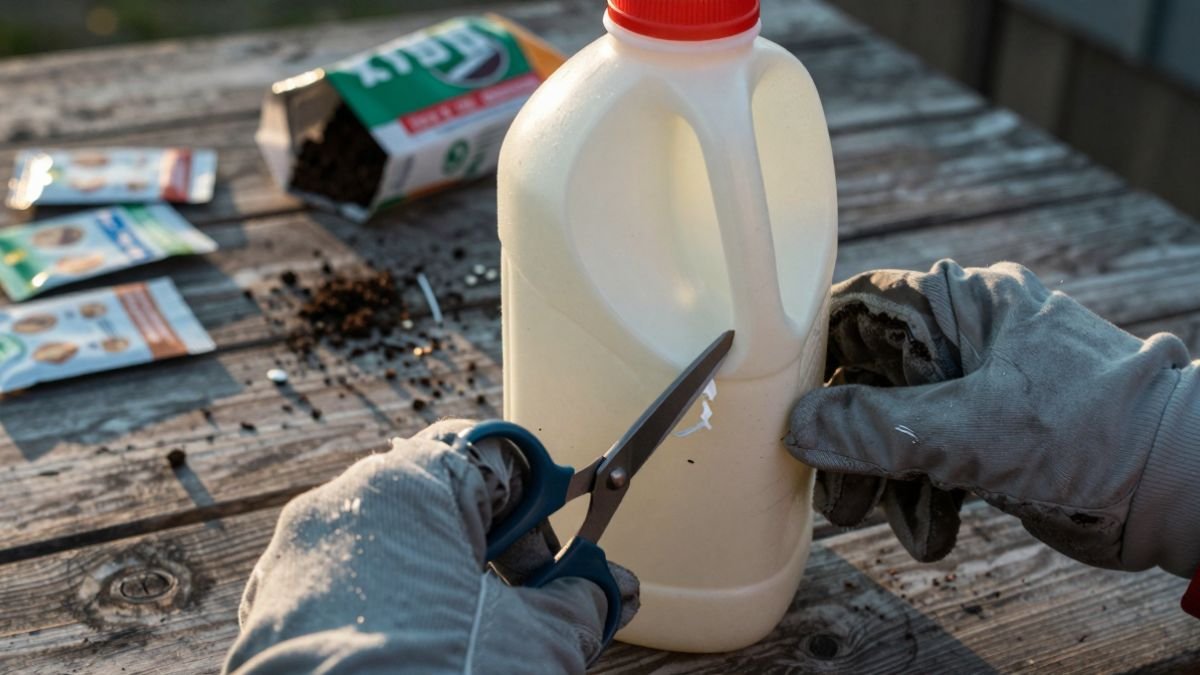
You’ve been tossing out the perfect seed-starting containers all winter long—and they’ve been sitting in your recycling bin this whole time.
Those empty milk jugs cluttering your kitchen? They’re about to become your secret weapon for starting seeds outdoors in the dead of winter, no grow lights required. It sounds completely backwards, but winter sowing is changing the game for gardeners who are tired of leggy seedlings dying under basement lamps or spending a fortune at the nursery come spring.
What exactly is winter sowing?
Winter sowing is brilliantly simple: you plant seeds in clear plastic containers (milk jugs are perfect) during the coldest months—December through February in most of the US—and leave them outside to weather the freeze-thaw cycles naturally.
The jugs act like tiny greenhouses. Seeds germinate when they’re naturally ready, seedlings grow stronger because they’re already hardened off, and you skip the entire indoor setup. No heat mats, no special lighting, no babysitting fragile sprouts on your windowsill.
Here’s why it works:
- Natural stratification: Many seeds actually need cold exposure to germinate properly
- Stronger seedlings: Plants grown outdoors from the start develop robust root systems
- Perfect timing: Seeds sprout exactly when conditions are right in your climate
- Zero cost: You’re literally using trash and free winter moisture

How to set up your milk jug greenhouses
The process takes about 10 minutes per container:
Step 1: Rinse a gallon milk jug and cut it horizontally around the middle, leaving a “hinge” of plastic at the handle side. You want it to open like a clamshell.
Step 2: Poke 4-5 drainage holes in the bottom using a drill, awl, nail, or sturdy scissors. Make sure excess water can drain freely.
Step 3: Fill the bottom half with 3-4 inches of moistened potting mix. Plant your seeds according to packet depth (most go shallow in winter sowing).
Step 4: Close the jug and secure it with duct tape or packing tape. Leave the cap off—ventilation is critical to prevent mold.
Step 5: Label each jug with a permanent marker (trust us, you’ll forget what you planted). Set them outside in a spot that gets sun but won’t turn into a wind tunnel.
What seeds work best?
The magic of winter sowing is that it works for plants that tolerate cold or need stratification:
- Flowers: Rudbeckia, coneflowers, snapdragons, sweet peas, poppies, foxgloves
- Herbs: Lavender, chamomile, parsley, cilantro
- Vegetables: Kale, lettuce, broccoli, onions, leeks
Avoid heat-lovers like tomatoes, peppers, and basil unless you’re in a mild climate and sowing in late February. Those need consistent warmth to germinate.

The waiting game (and what to watch for)
Here’s where winter sowing requires patience: nothing will happen for weeks. You’ll walk past those jugs in January thinking you’ve lost your mind. Then, sometime between late February and early April depending on your zone, you’ll notice tiny green specks.
Once seedlings have their first true leaves (the second set of leaves that appear), start gradually opening the jugs on warm days to increase airflow. By the time your last frost date arrives, you’ll have hardened-off transplants ready to go straight into the garden.
If you see condensation building up inside, prop the jug open slightly with a stick. Too much moisture causes damping off disease, which will kill seedlings overnight.
Why I’m obsessed with this method
I am not not exaggerating when we say this technique has a cult following. The Winter Sowers community has been swearing by milk jug greenhouses for over 20 years, and once you try it, you’ll understand why:
You’re working with nature instead of fighting it. Those seedlings don’t need to be “hardened off” because they’ve been outside their entire lives. They don’t get transplant shock. They’re already adapted to wind, temperature swings, and real sunlight—not the artificial environment of your spare bedroom.
Plus, there’s something deeply satisfying about reusing containers that would otherwise end up in a landfill and turning winter—the most dormant season—into productive gardening time.
Get started now
If you’re reading this in December or January, you’re in the perfect window to start. Grab those milk jugs, order some seed packets (or raid last year’s stash), and spend a Sunday afternoon setting up your mini greenhouses.
By the time March arrives and your neighbors are just starting to think about gardening, you’ll already have dozens of thriving seedlings waiting to fill your beds. And you’ll have done it for practically nothing, using materials you would have thrown away anyway.
That’s the kind of clever gardening hack that makes you feel like you’ve cracked some secret code—because you have.