Most store-bought potting soil turns into a waterlogged, root-rotting swamp within weeks—or worse, it drains so fast your plants wilt between waterings. The truth? You don’t need a dozen ingredients or a degree in soil science. You need two non-negotiable components and a simple base recipe that actually balances air, water, and nutrients.
Let’s skip the trial-and-error phase and build a DIY potting mix that works the first time.
What potting soil must actually do (and why most DIY mixes fail)
Potting soil has three jobs: hold moisture without drowning roots, allow oxygen to reach the root zone, and deliver steady nutrients. Most homemade mixes nail one or two but fail the third.
Garden soil alone? Too dense. Roots suffocate. Pure compost? It compacts into a brick after a few waterings. Sand-heavy mixes? They drain so fast that nutrients wash away and plants starve.
The magic happens when you balance structure (the physical scaffolding that keeps air pockets open) with water retention (materials that hold moisture like a sponge) and nutrition (slow-release organic matter).

The base recipe: simple, repeatable, and proven
Here’s the foundational mix that works for 80% of container plants—from tomatoes to ferns:
- 40% coconut coir or peat moss (water retention)
- 30% perlite or pumice (aeration and drainage)
- 30% high-quality compost (nutrients and microbial life)
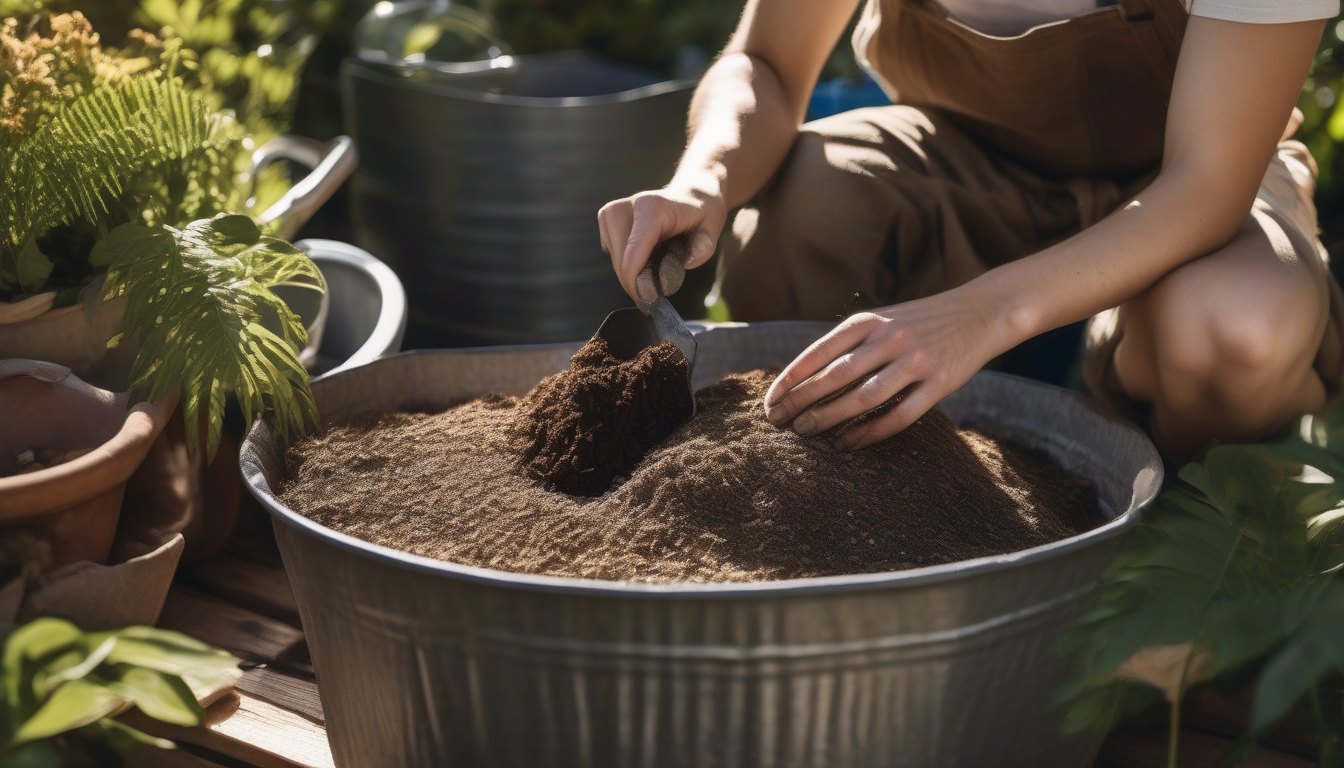
Mix these three thoroughly in a large tub or wheelbarrow. Moisten the coir or peat first—it absorbs water slowly when bone-dry. Add water gradually until the mix feels like a wrung-out sponge: damp but not dripping.
This ratio creates air pockets that let roots breathe while holding enough moisture to buffer between waterings. The compost feeds plants for the first 6–8 weeks, after which you’ll supplement with liquid fertilizer.
The two non-negotiables you can’t skip
1. A drainage component (perlite, pumice, or coarse sand)
This is non-negotiable number one. Without it, your mix will compact, water will pool, and roots will rot.
Perlite is the most common choice—those white, lightweight volcanic glass chunks you see in commercial mixes. It doesn’t break down, so it keeps soil airy for years. Pumice works identically and lasts even longer. Coarse builder’s sand (not fine play sand) is a budget alternative, but it’s heavier and can settle over time.
Aim for at least 25–30% of your total volume. If you’re growing succulents or cacti, push it to 50%.
2. Organic matter that’s fully decomposed (compost or worm castings)
Non-negotiable number two: your organic matter must be finished—dark, crumbly, and earthy-smelling. Fresh manure, half-rotted leaves, or chunky compost will burn roots or tie up nitrogen as they continue breaking down inside the pot.
Worm castings are gold standard—they’re gentle, nutrient-rich, and improve soil structure. Compost from a reliable source (your own aged pile or a trusted supplier) works beautifully. Avoid “topsoil” or “garden soil” bags unless you know they’re screened and composted; many are just cheap fill dirt.
If you skip this component, you’ll need to fertilize heavily from day one. Organic matter also feeds beneficial microbes that protect roots and unlock nutrients.

Plant-specific adjustments: one mix doesn’t fit all
The base recipe is versatile, but tweaking it takes 30 seconds and dramatically improves results.
For succulents and cacti: Increase drainage to 50% perlite or pumice, reduce compost to 20%, and add 10% coarse sand. These plants evolved in gritty, fast-draining soils. Excess moisture is their enemy.
For moisture-loving tropicals (ferns, calatheas, peace lilies): Boost coir or peat to 50% and drop perlite to 20%. Add a handful of orchid bark for extra aeration without sacrificing water retention.
For herbs and vegetables: Stick close to the base recipe, but add a slow-release organic fertilizer (like kelp meal or bone meal) at planting time. Edibles are heavy feeders, especially in containers.
For orchids: Forget soil entirely. Use 80% orchid bark, 10% perlite, and 10% charcoal. Orchids are epiphytes—they cling to trees in nature and need massive air circulation around roots.
How to store and refresh your DIY mix
Mixed potting soil stays good for months if stored properly. Keep it in a sealed plastic bin or heavy-duty trash bag, away from direct sun. Moisture is fine—just avoid soaking wet, which can trigger mold or anaerobic smells.
Before reusing soil from last season’s pots, refresh it. Remove old roots and debris, then mix in 20–30% fresh compost and a handful of perlite to restore structure. If plants struggled or showed disease, toss that soil in the garden (not back into containers) to avoid reinfecting new plants.
Never reuse soil from pots where plants died of root rot, blight, or severe pest infestations. It’s not worth the risk.

Common DIY mistakes that sabotage your mix
Using garden soil straight from the ground: It compacts like concrete in containers. Garden soil is designed for in-ground beds where worms and weather keep it loose. In a pot, it chokes roots.
Skipping the perlite to save money: This is the fastest way to kill plants. Drainage isn’t optional. A $12 bag of perlite will fill 10+ large pots—it’s the cheapest insurance you can buy.
Adding fertilizer at mixing time: Slow-release organic amendments (bone meal, kelp) are fine, but never add synthetic granular fertilizer to dry mix. It can burn roots on contact. Wait until plants are established, then feed according to label directions.
Not moistening coir or peat before mixing: Dry peat is hydrophobic—it repels water for the first few waterings, leaving roots dry even when you think you’ve watered thoroughly. Pre-soak it in a bucket, then squeeze out excess before mixing.
Measuring by weight instead of volume: Potting mix recipes are always by volume (buckets, scoops), not weight. Perlite weighs almost nothing; compost is dense. A 1:1:1 weight ratio will give you a wildly unbalanced mix.
Your next steps: mix a small batch and scale up
Start with a single 5-gallon bucket’s worth—about 1.5 gallons each of coir, perlite, and compost. That’s enough to fill three 10-inch pots or six 6-inch pots. Test it on a few plants this week.
Watch how quickly it drains after watering (water should soak in within seconds, not pool on top) and how long it stays moist between waterings (aim for 2–4 days for most plants in average indoor conditions).
Once you’ve dialed in the recipe for your space, mix in bulk. A single afternoon of mixing will supply your containers for the entire 2026 growing season—and you’ll never go back to overpriced, underperforming bagged soil again.