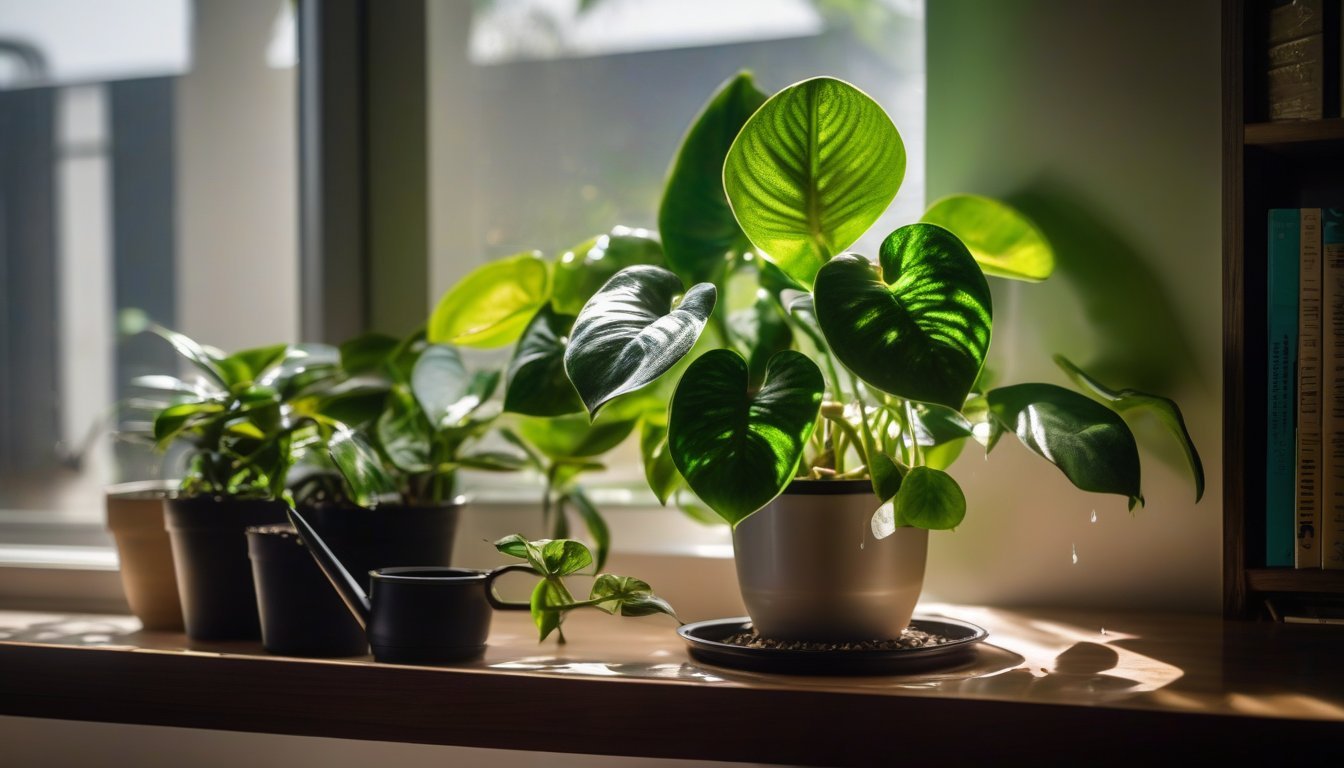
Most people position their pothos plants on a sunny windowsill, thinking that’s where they’ll thrive. But here’s the twist: those lush green leaves can start to wilt and brown faster than you’d expect. Instead, that cozy spot on your bookshelf might just be the secret to a thriving plant. Let’s unravel why your pothos might be happier nestled among your favorite novels than basking in the sun.
Imagine waking up on a chilly January morning, still in the heart of winter, only to find your plant looking less vibrant. It’s a relatable moment for many plant parents. But before you give up, let’s explore why the bookshelf could be your pothos’s best friend.
Understanding Pothos Light Requirements
Pothos, native to the dense forests of Southeast Asia, are naturally adapted to thrive under the canopy of tall trees. This background means they’re accustomed to low-light environments, making them perfect for spots with indirect light.
Direct sunlight can be harsh, especially for plants that evolved under the protective cover of other foliage. Indirect light, like what you’d find on a bookshelf, provides a gentle glow that suits the pothos’s needs perfectly. If your plant’s leaves are vibrant and glossy, you’re doing it right. If they’re turning yellow or developing brown spots, it might be time to reconsider their light exposure.

The Impact of Light on Pothos Health
Light is a crucial player in photosynthesis, the process that keeps your pothos healthy and growing. But too much of a good thing can be harmful. Too much direct sunlight can scorch the leaves, leading to dry, crispy edges. Conversely, too little light can cause slow growth and dull, limp foliage.
Symptoms of light imbalance are easy to spot: browning edges indicate sunburn, while leaves that lose their vibrant hue might be signaling not enough light. Finding the right balance is essential for a thriving plant.
Why Bookshelves Provide Ideal Conditions
Bookshelves often provide the perfect microclimate for pothos. They offer indirect light exposure, which is ideal for these plants. Unlike windowsills, bookshelves are typically protected from direct sunlight, reducing the risk of leaf scorch.
Additionally, the stable environment of a bookshelf helps maintain consistent temperature and humidity levels, crucial for plant health. Unlike windowsills, which can be drafty and subject to temperature fluctuations, a bookshelf keeps your plant safe from sudden environmental changes.
Moreover, being on a bookshelf means fewer disturbances. Your plant won’t face the same risks of being knocked over or exposed to drafts from opening and closing windows.
Challenges of Windowsill Placement
While windowsills might seem like a natural choice for light-loving plants, they can be problematic for pothos. Direct sunlight issues are common, as the intense rays can scorch the leaves, leaving unsightly brown patches.
Temperature fluctuations are another concern. Windows can create drafts and lead to extremes in temperature, which can stress your plant. And don’t forget about humidity levels—windowsills can be drier, especially in winter, which is less than ideal for pothos.
Best Practices for Pothos Placement
Finding the ideal spot for your pothos involves considering both light and environmental factors. Here are a few tips:
- Ideal locations: Besides bookshelves, consider placing your pothos in rooms with filtered light, like bathrooms with frosted windows or kitchens with sheer curtains.
- Adjusting care: If your plant is in a low-light area, reduce watering frequency to prevent root rot. Conversely, plants in brighter spots may need more frequent hydration.
- Using grow lights: If natural light is insufficient, especially during the darker winter months, consider supplementing with grow lights to keep your pothos thriving.
As we step into 2026, let this be the year you transform your home into a green oasis. By understanding your pothos’s light needs and choosing the right spot, you can ensure your plant not only survives but thrives. Remember, the best plant care combines the right environment with a bit of love and attention. Happy growing!