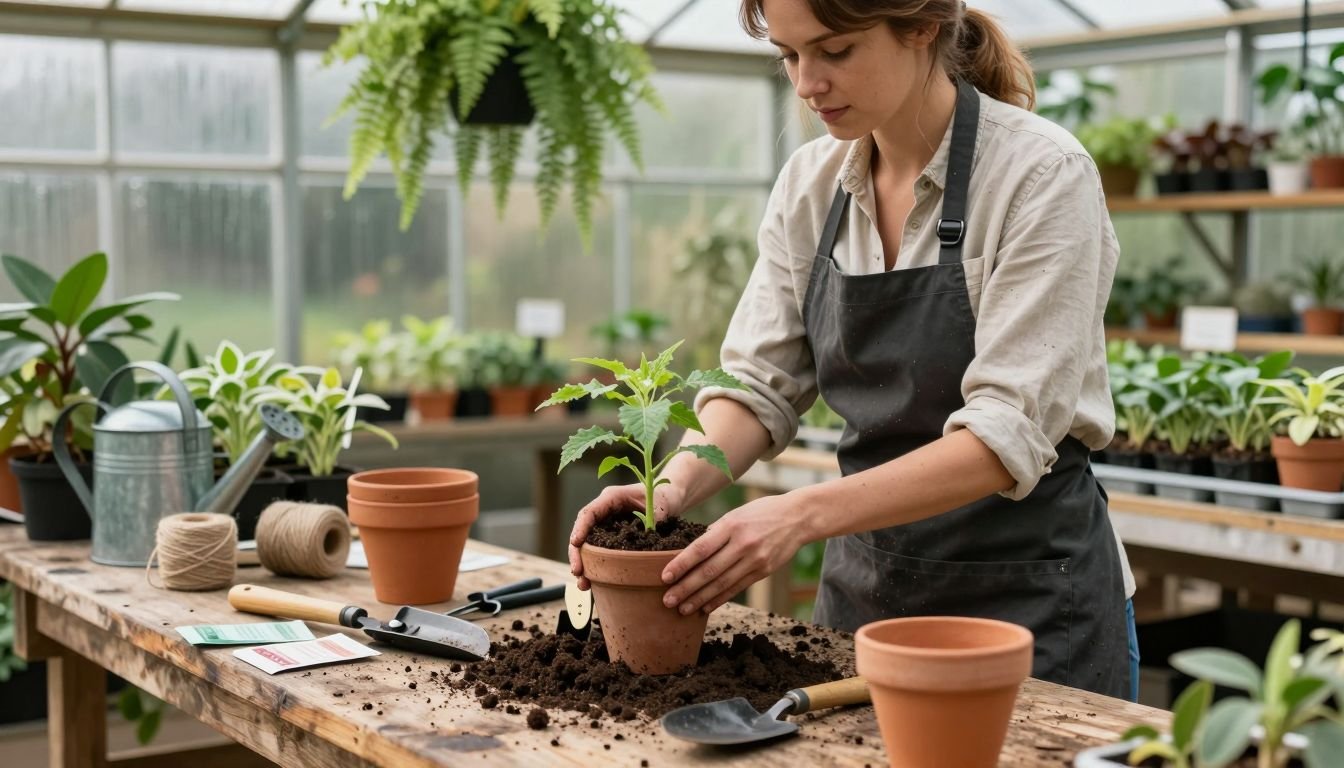
You finally decided to embrace your inner gardener, bought a dozen terracotta pots, and now your kitchen counter looks like a soil explosion zone. A potting bench sounds like the answer—until it becomes another piece of garage clutter you sidestep for three years. The difference between a bench you’ll actually use and one that collects dust comes down to six practical details most buyers overlook.
With gardening surging as a favorite hobby heading into 2026, potting benches are everywhere. But before you click “buy,” let’s talk about what separates a tool from a regret.
Measure your space and your body, not just the bench
Most people eyeball a corner of the garage or patio and assume a bench will fit. The real question is whether you’ll fit comfortably while working.
Standard potting benches run 36 to 48 inches wide, but depth matters more than you think. A shallow bench (12 inches or less) forces you to lean forward awkwardly. Aim for at least 16 to 20 inches of depth so you can set a pot, a bag of soil, and your tools without playing Tetris.
Working height is where most buyers get burned. If you’re over 5’8″, a 36-inch-tall bench will save your lower back. Shorter gardeners often prefer 32 to 34 inches. Stand at your kitchen counter and notice where your elbows naturally fall—that’s your sweet spot. If the bench is too low, you’ll hunch. Too high, and your shoulders will ache after ten minutes.
Measure twice, order once. And remember: a bench that doesn’t fit your body won’t get used, no matter how cute it looks in the product photo.

Storage that actually matches how you garden
A potting bench without smart storage is just an expensive table.
The must-have feature is a soil bin or lower shelf with a lip. This catches spills and keeps bags of potting mix off the ground where moisture and pests love to gather. Some benches include a removable tray or galvanized metal bin—these are gold for easy cleanup.
Look for side hooks or a pegboard back panel. You’ll want a place to hang trowels, gloves, pruners, and twine within arm’s reach. If the bench doesn’t come with hooks, make sure the frame allows you to add your own without drilling into a wall.
Shelves matter, but only if they’re the right size. A single wide shelf beats two narrow ones if you store watering cans, fertilizer jugs, or stacks of seed trays. Open shelves dry out faster than enclosed cabinets, which is better for damp gardening gear.
Skip benches with tiny decorative cubbies unless you only garden with fairy-sized tools. Real storage holds real stuff.
Indoor vs outdoor materials: know where it’s actually going
This is where impulse buys go wrong. A bench that works on a covered porch will rot on an exposed patio.
Cedar and teak handle weather beautifully but cost more upfront. They resist moisture, won’t warp in humidity, and age into a silvery patina. If you’re leaving the bench outside year-round in a rainy climate, natural rot-resistant wood is worth the investment.
Powder-coated metal or galvanized steel works for covered outdoor areas and garages. It’s durable, lightweight, and often cheaper. Just check that joints are welded or bolted, not just snap-fit plastic clips that crack in cold weather.
Pine or composite wood is fine for indoor use or a dry shed, but it will swell and splinter if left in the rain. If you’re potting indoors (basement, sunroom, mudroom), prioritize easy cleanup: sealed wood or metal surfaces wipe down faster than raw lumber.
One overlooked detail: does the bench have adjustable feet or rubber caps? Uneven ground or concrete floors will make a wobbly bench miserable to use.

Budget vs splurge: what’s actually worth paying for
You can find a basic potting bench for under $100 or drop $400 on a deluxe model. The sweet spot for most gardeners is $150 to $250, where you get solid construction without paying for features you’ll never use.
Cheap benches (under $80) often use thin particleboard that sags under a bag of soil or flimsy hardware that strips after one season. If the bench requires assembly and the reviews mention “confusing instructions” or “missing screws,” walk away.
Splurge-worthy upgrades include:
- A built-in sink or hose hook if you have outdoor plumbing nearby
- Fold-down side tables that expand your workspace when you’re repotting multiple plants
- Locking casters if you need to move the bench between a garage and a patio
Skip the splurge on decorative lattice backs, ornate drawer pulls, or “distressed” finishes that add cost but zero function.
DIY shortcuts if you’re handy or on a tight budget
You don’t need a custom build to get a functional potting station.
A sturdy folding table (30 to 36 inches tall) plus a pegboard panel leaned against a wall gives you 80% of a potting bench for under $60. Add a plastic storage bin underneath for soil and a handful of S-hooks for tools.
Repurpose an old dresser or console table. Remove the top drawer, line the cavity with a plastic tray, and you’ve got a built-in soil bin. The remaining drawers hold seed packets, labels, and gloves.
If you’re comfortable with a drill and saw, build a simple frame from 2×4 lumber and top it with a sheet of plywood. Seal the wood with exterior polyurethane, add a lower shelf, and screw in a few hooks. Total cost: around $50 to $80, and it’ll outlast most big-box benches.
The key is making sure your DIY setup has the same core features: right height, enough depth, and accessible storage.

The minimalist setup when space is tight
Not everyone has room for a full bench, and that’s okay.
A wall-mounted fold-down shelf (24 inches wide) gives you a work surface that disappears when you’re done. Mount it at elbow height, keep a small bin of tools on a nearby shelf, and you’re set.
A rolling cart (like a kitchen island cart) works beautifully for apartment gardeners. Look for one with a butcher block or stainless steel top, a lower shelf for soil bags, and wheels that lock. When you’re finished potting, roll it into a closet or corner.
Even a large plastic tote (18-gallon size) turned upside down can serve as a temporary potting surface on a balcony. Keep your tools inside the tote, flip it over when you need a table, then flip it back for storage.
The minimalist rule: if it takes more than 30 seconds to set up, you won’t use it regularly. Keep it simple and accessible.
What to do before you click “buy”
Before you commit, ask yourself three questions:
- Where will this bench live 11 months of the year? If the answer is “I’ll move it around,” make sure it has wheels or weighs less than 40 pounds.
- What’s the messiest task I’ll do here? If you’re mixing soil or washing roots, you need a surface that handles water and dirt without staining or warping.
- Can I return it if it doesn’t work? Check the return policy, especially for large items that ship assembled.
Read reviews that include photos of the bench in actual use, not just the glamour shots. Look for mentions of stability, ease of assembly, and how it holds up after a season.
A potting bench should make your gardening life easier, not become another project on your to-do list. Choose one that fits your space, matches how you actually garden, and feels like a tool you’ll reach for every time you bring home a new plant. That’s the bench that earns its spot.