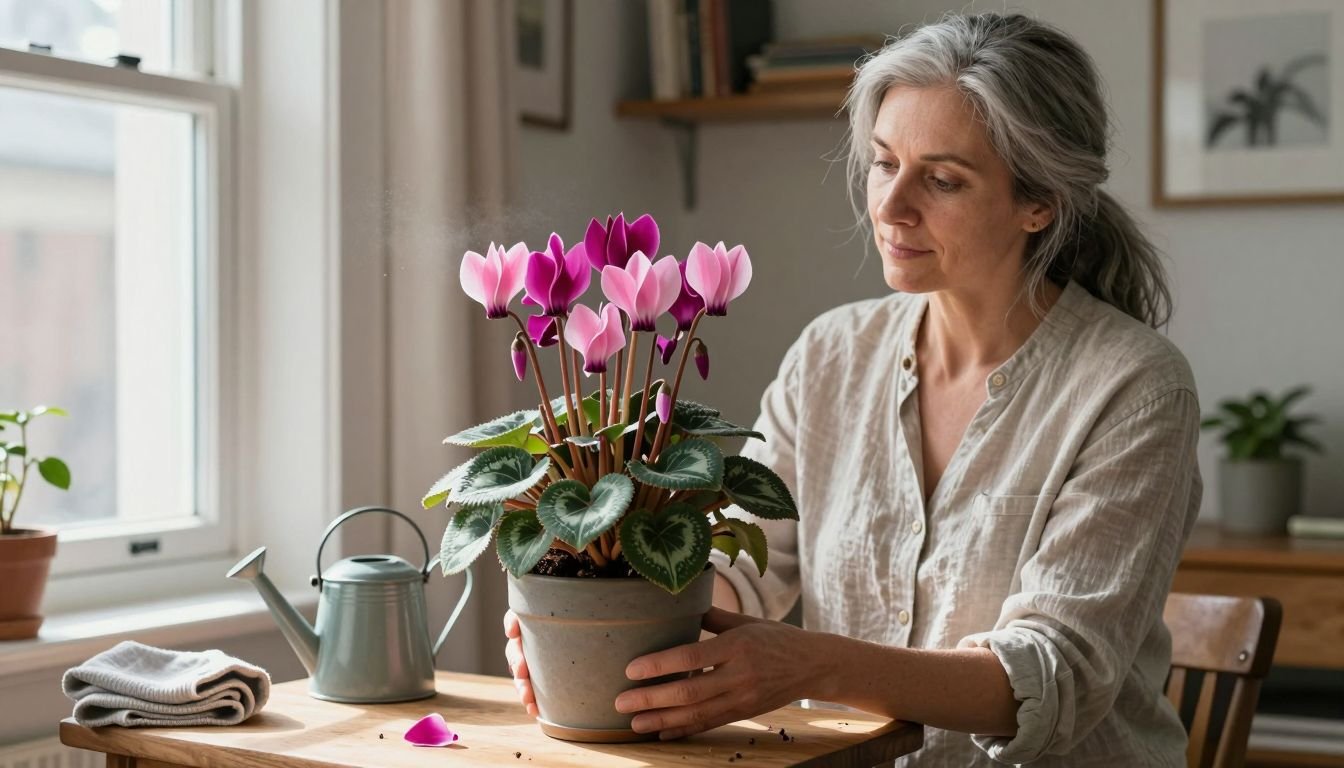
Your cyclamen looked perfect at the garden center—bright blooms, lush leaves, pure winter magic. But ten days after you brought it home, the flowers started drooping, the leaves turned yellow, and now you’re wondering what went wrong. Here’s the truth: cyclamen are drama queens indoors, and they fail fast when temperature or watering are even slightly off. The good news? Once you understand their quirks, they’re surprisingly easy to keep blooming for months.
The ‘cool and bright’ rule: Recreating cyclamen’s natural habitat
Cyclamen are native to Mediterranean forests, where winters are cool, bright, and humid. They thrive in temperatures between 50–65°F (10–18°C)—much cooler than most homes in late December.
If your cyclamen sits near a heating vent, on top of a radiator, or in a room that stays above 68°F, the blooms will wilt within days. Heat is the number one killer of indoor cyclamen.
Where to place your cyclamen:
- A north- or east-facing windowsill with bright, indirect light
- An unheated sunroom, enclosed porch, or cool entryway
- A bathroom with a window (bonus: natural humidity)
- Away from heat sources, fireplaces, and forced-air vents
If your home runs warm, try placing the pot on a tray of pebbles filled with water (pot above the waterline). As the water evaporates, it creates a cooler microclimate around the plant.

Bottom-watering method: The only way to water cyclamen safely
Cyclamen have a tuberous corm at the base—a swollen, bulb-like structure that stores energy. If water sits on top of the corm, it rots within days. Top-watering is the fastest way to kill a cyclamen.
Step-by-step bottom-watering:
- Fill a shallow dish or tray with room-temperature water (about 1 inch deep).
- Place the cyclamen pot in the water. Make sure the water level reaches halfway up the pot’s side.
- Let the plant sit for 20–30 minutes. The soil will absorb water from the bottom through the drainage holes.
- Lift the pot. If the top of the soil feels moist to the touch, it’s done. If not, let it sit another 10 minutes.
- Remove the pot and let excess water drain completely. Never let the pot sit in standing water.
How often to water:
Check the soil every 3–4 days. Water only when the top inch feels dry. In a cool room, you may only need to water once a week. In a warmer space, twice a week.
Deadheading blooms: The secret to months of flowers
Cyclamen bloom from late fall through early spring—sometimes for four months straight. But spent flowers need to be removed properly, or they’ll drain energy and invite mold.
Don’t snip the stems with scissors. Instead, grasp the stem close to the base and give it a firm, quick tug with a slight twist. The entire stem should pull cleanly away from the corm. If you leave a stub, it will rot.
Do the same with yellowing leaves. Remove them at the base, not halfway up the stem.
Deadhead every few days. It takes 30 seconds and can double your bloom time.

Overwatering vs underwatering: How to read the signals
Cyclamen send clear distress signals—but the symptoms can look similar at first glance.
Signs of overwatering:
- Leaves turn yellow and mushy (not crispy)
- Stems collapse suddenly
- Soft, brown spots on the corm
- Foul smell from the soil
- Mold or fungus gnats around the base
Signs of underwatering:
- Leaves and flowers droop dramatically but perk up after watering
- Soil pulls away from the sides of the pot
- Leaves feel thin and papery
- No new buds forming
If you suspect overwatering, stop watering immediately. Let the soil dry out for several days. If the corm feels squishy, the plant is likely beyond saving. If it’s still firm, reduce watering frequency and improve air circulation.
If underwatered, give it a good bottom soak and it should bounce back within hours.
What to do after blooming ends: The dormancy plan
By late spring (April or May in the United States), your cyclamen will naturally start to slow down. Flowers stop forming, leaves yellow and die back. This is not failure—it’s dormancy, and it’s how cyclamen survive hot, dry summers in the wild.
How to manage dormancy:
- Gradually reduce watering as blooms fade. Stop watering entirely once all leaves have died back.
- Place the pot in a cool, dark, dry spot (basement, garage, or closet). Keep it around 50–55°F if possible.
- Leave the corm in the pot. Do not remove it or disturb the roots.
- In late summer (August or early September), bring the pot back into bright, cool light.
- Begin watering lightly. Within 2–3 weeks, new leaves and buds will emerge.
- Resume regular bottom-watering and feeding with a diluted liquid fertilizer every two weeks.
With proper dormancy care, the same cyclamen can bloom for 5–10 years or more. Each year, the corm grows larger and produces more flowers.

Bonus tips for long-term cyclamen success
- Feed sparingly. Use a half-strength liquid fertilizer (balanced or low-nitrogen) every 2–3 weeks during active growth. Stop feeding during dormancy.
- Avoid drafts. Cyclamen hate cold drafts from windows or doors as much as they hate heat.
- Don’t repot mid-bloom. Wait until after dormancy to repot, and go up only one pot size. Cyclamen like being slightly root-bound.
- Watch for pests. Cyclamen mites (tiny, invisible to the naked eye) can distort new growth. If leaves look twisted or buds fail to open, isolate the plant and treat with insecticidal soap.
Cyclamen aren’t low-maintenance houseplants, but they’re not finicky once you respect their needs. Cool, bright, and bottom-watered—that’s the formula. Nail those three things, and your cyclamen will reward you with waves of jewel-toned blooms all winter long.