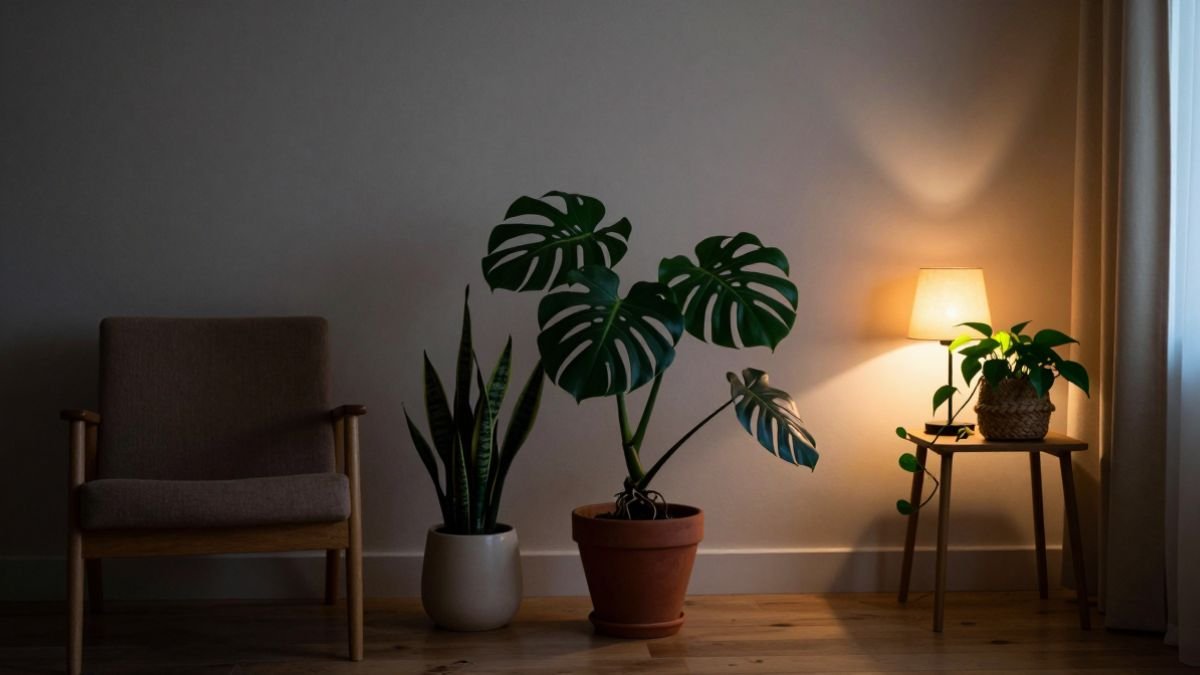
You’ve probably scrolled past a dozen “best low-light plants” lists, bookmarked one or two, then watched your supposedly shade-loving pothos turn leggy and pale within a month. The truth? Most of those lists conflate “survives” with “thrives,” and there’s a massive difference. A plant that clings to life in a dim corner isn’t the same as one that keeps its shape, color, and charm when the sun never quite reaches it.
Let’s fix that. These nine plants don’t just tolerate low light—they actually look good in it. No stretching toward the window, no washed-out leaves, no guilt.
What low light actually means
Before we get to the plants, let’s clear up the biggest myth: “low light” doesn’t mean no light. It means indirect light, the kind you get several feet from a window, or in a room where the sun never directly hits the floor. Here’s a quick test: stand in the spot where you want to put a plant at midday. Pull out your phone and try to read a text message without turning up the brightness. If you can read it comfortably, you’ve got enough light for these plants. If you’re squinting, you’re in deep shade, and even the toughest plants will struggle.
North-facing windows, interior bathrooms with frosted glass, hallways, and corners opposite east or west windows all qualify as low light. A windowless basement does not.
9 plants that keep their looks in the shade
ZZ plant (Zamioculcas zamiifolia): Thick, waxy leaves that stay glossy even in dim conditions. The stems grow upright and architectural, no flopping. It’s nearly indestructible, and the deep green doesn’t fade. If you forget to water it for three weeks, it won’t punish you.
Pothos ‘Jade’ (Epipremnum aureum): Notice I said ‘Jade,’ not the variegated golden pothos everyone recommends. Variegation needs light to maintain those cream streaks. The solid green Jade variety keeps its color and doesn’t stretch as aggressively. It’ll still vine, but the leaves stay full-sized and dark.
Cast iron plant (Aspidistra elatior): The name tells you everything. It tolerates neglect, dust, temperature swings, and low light without losing its upright, blade-like form. The leaves are a deep, matte green that doesn’t yellow easily. It grows slowly, which is actually a benefit—no constant pruning.
Snake plant (Dracaena trifasciata): Specifically the darker varieties like ‘Black Gold’ or ‘Superba.’ The lighter, cream-edged types lose contrast in low light. The dark ones stay bold and vertical. They’re also one of the few plants that tolerate both low light and low humidity, which makes them perfect for windowless offices or basements.
Parlor palm (Chamaedorea elegans): A true low-light palm. Most palms demand bright indirect light, but the parlor palm evolved on the forest floor in Central America. It stays compact, the fronds stay feathery, and it doesn’t brown at the tips as readily as other palms. Just don’t let it dry out completely.
Philodendron ‘Green’ (Philodendron hederaceum): Like pothos, skip the variegated versions. The solid green heartleaf philodendron keeps its deep color and doesn’t get leggy if you keep it trimmed. It’s also more forgiving about inconsistent watering than its cousin, the Brasil.
Aglaonema (Chinese evergreen): Look for the darker varieties like ‘Emerald Bay’ or ‘Maria.’ The bright red and pink types need more light to hold their color. The deep green and silver patterns stay crisp in low light, and the plant grows in a tight, bushy clump instead of sprawling.
Dracaena ‘Janet Craig’ (Dracaena fragrans): Tall, dark, and unbothered. The leaves are a glossy, almost black-green, and they grow in a fountain shape. It’s slow-growing, which means it holds its form for years without looking scraggly. It also tolerates dry air better than most tropicals.
Peperomia obtusifolia (Baby rubber plant): Thick, succulent-like leaves that stay plump and green in low light. It grows in a compact mound, no vining or sprawling. The leaves have a slight sheen that catches whatever light is available. It’s small enough for a bookshelf or bathroom counter.
The low-light care shift
Once you move a plant into lower light, the care routine changes. The biggest mistake people make is watering on the same schedule they used in a brighter spot. Less light means slower photosynthesis, which means slower water uptake. In low light, most of these plants need water half as often—sometimes less.
Stick your finger two inches into the soil. If it’s damp, wait. If it’s dry, water thoroughly until it drains out the bottom, then don’t water again until it dries out at that same depth. Overwatering kills more low-light plants than underwatering.
Dust is the other thing people ignore. In low light, every bit of leaf surface matters for photosynthesis. A layer of dust blocks light absorption. Wipe the leaves with a damp cloth once a month. It takes five minutes and makes a visible difference in how healthy the plant looks.
Rotation matters more in low light, too. Even indirect light has a direction. If your plant is near a window, turn it a quarter turn every time you water so all sides get equal exposure. Otherwise, it’ll lean and grow lopsided.

When a cheap grow bulb is worth it
If your room truly has no natural light—think a basement office or an interior bathroom—a small LED grow bulb can make the difference between a plant that survives and one that actually grows. You don’t need an expensive setup. A clip-on grow bulb (around 15 watts, full spectrum) positioned a foot above the plant for 8 to 10 hours a day is enough for most of these species.
Look for bulbs labeled “full spectrum” or “daylight” (5000K to 6500K). Avoid the purple “blurple” lights; they work, but they make everything look like a nightclub. A warm white grow bulb blends into your decor and still delivers the light spectrum plants need.
Set it on a timer so you don’t have to remember to turn it on and off. This is especially useful in winter when natural light drops even further.
Red flags: stretching, pale leaves, and how to fix fast
Even the most shade-tolerant plant will tell you when it’s not getting enough light. Here’s what to watch for.
Stretching (etiolation): If the space between leaves starts growing longer and the stems get thin and weak, the plant is reaching for light it can’t find. Move it closer to a window or add a grow light. If it’s already stretched, you can prune it back to encourage bushier growth, but the stretched parts won’t shrink.
Pale or yellowing leaves: If new growth comes in lighter than the old leaves, or if the whole plant starts losing its deep green color, it needs more light. This is especially common with variegated plants in low light—the white parts expand and the green fades. Swap it for a solid green variety or move it to a brighter spot.
Leaf drop: A few old leaves dying off is normal. A sudden drop of multiple leaves usually means overwatering in low light. Let the soil dry out more between waterings and check for root rot (mushy, brown roots). If the roots are still white and firm, just adjust your watering schedule.
Slow or no growth: In low light, growth slows down, especially in winter. That’s normal. But if a plant hasn’t put out a single new leaf in six months during spring or summer, it might need a bit more light or a dose of diluted fertilizer. Don’t fertilize in fall or winter—plants in low light go semi-dormant and won’t use the nutrients.
Pick one or two plants from this list, place them in your dimmest room, and stop apologizing for your lack of sunlight. These plants don’t need your guilt—they just need consistency.