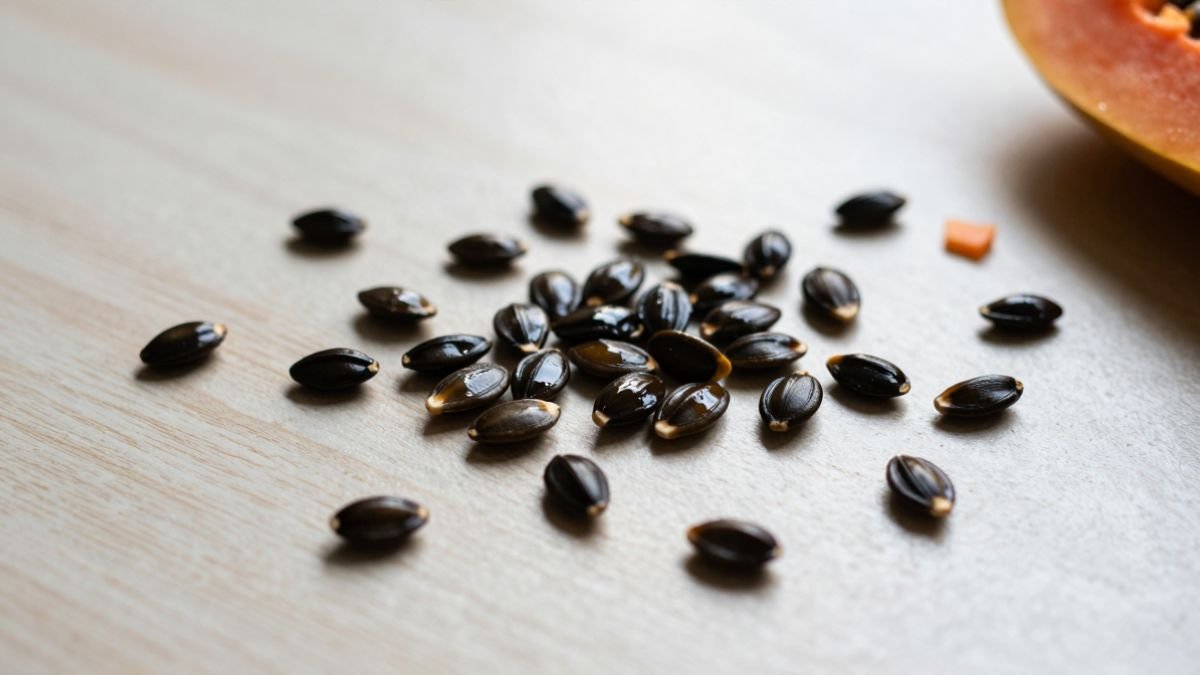
You’ve scooped the seeds from a ripe papaya, rinsed them under the tap, planted them in soil, and waited. And waited. Three weeks later? Nothing. The problem isn’t that papaya seeds are fussy—it’s that most guides skip the single messiest step that makes or breaks germination: stripping off the gelatinous sarcotesta coating that clings to every seed.
That slippery gel isn’t just annoying. It contains germination inhibitors—natural chemicals that prevent seeds from sprouting inside the fruit. If you plant seeds with the gel still on, you’re asking them to fight an uphill battle against their own biology. Add the wrong temperature or too much moisture, and you’ve created the perfect recipe for mold, rot, and total failure.
Here’s exactly what to do instead, step by step, so you can see green shoots in under three weeks.
Pick viable seeds using the float test
Not all papaya seeds are created equal. Even in a perfectly ripe fruit, some seeds are duds—immature, hollow, or damaged.
Fill a bowl with room-temperature water and drop your freshly scooped seeds in. Viable seeds sink. Dead seeds float. Skim off the floaters and discard them. The sinkers are your candidates.
Freshness matters, too. Papaya seeds lose viability fast once exposed to air. If you’re buying seeds online or from a packet that’s been sitting on a shelf for months, expect poor results. Use seeds from a fruit you’ve just eaten, ideally within 24 hours of opening it.
Remove the gel coating properly (the step everyone skips)
This is where most people go wrong. A quick rinse under the faucet won’t cut it. The sarcotesta is sticky, waxy, and designed to cling.
Here’s the method that works:
- Place your viable seeds in a small bowl or jar.
- Add a tablespoon of clean sand, fine pumice, or even a handful of paper towel shreds.
- Add just enough water to cover the seeds.
- Rub the seeds between your fingers for 2–3 minutes, using the abrasive material to scrub off the gel. You’ll feel the texture change from slippery to slightly rough.
- Rinse thoroughly in a fine-mesh strainer until the water runs clear and the seeds no longer feel slimy.
Your seeds should now look matte, dark brown or black, and completely clean. If they still feel slick, repeat the process.
Optional: Quick ferment to reduce mold risk
Some growers swear by a 24-hour fermentation step, especially in humid climates where mold is a constant threat.
After the float test but before scrubbing, leave the seeds in a jar of water at room temperature for 24 hours. The gel will start to break down naturally, and beneficial bacteria will outcompete mold spores. You’ll see a thin film or bubbles on the surface—that’s normal.
After 24 hours, scrub off the loosened gel as described above. Rinse well. This step is optional but highly recommended if you’ve had mold problems in the past.
Sowing depth and moisture rules
Papaya seeds are small, but they’re not dust. Plant them 1/4 inch deep—about the width of a pencil tip. Any deeper and they’ll struggle to push through. Any shallower and they’ll dry out.
Use a well-draining seed-starting mix, not garden soil. Garden soil compacts, holds too much water, and invites fungus gnats. A 50/50 blend of coco coir and perlite works beautifully.
Moisture is a balancing act. The soil should feel like a wrung-out sponge—damp but never soggy. Overwatering is the second-biggest killer after skipping the gel removal. Water from the bottom if possible, or mist the surface lightly once a day.
Heat mat temperatures and humidity dome setup
Papaya is a tropical plant. It wants warmth—consistent warmth—to germinate. Room temperature (65–70°F) is too cold. You need 80–85°F at soil level.
A seedling heat mat is non-negotiable unless you live in a naturally warm climate. Place your seed tray on the mat and use a soil thermometer to confirm the temperature. If it climbs above 90°F, raise the tray slightly with a folded towel to create an air gap.
Cover the tray with a clear humidity dome or plastic wrap to lock in moisture and warmth. Vent the dome daily for 5–10 minutes to prevent mold and allow fresh air in. As soon as you see green shoots, remove the dome completely.

What to do if nothing happens by day 21
Papaya seeds typically germinate in 10–21 days under ideal conditions. If you hit day 21 with no signs of life, don’t give up yet.
Check these three things:
- Temperature: Is the soil actually 80–85°F, or are you guessing? Use a thermometer.
- Moisture: Poke your finger into the soil. If it’s bone dry or waterlogged, adjust.
- Seed quality: Were the seeds fresh? Did you complete the gel removal?
If everything checks out, give it another week. Some seeds are slow starters, especially if they experienced temperature swings or slight drying during prep.
If you hit day 30 with zero germination, the batch is likely a loss. Start over with fresh seeds and double-check your process.
Transplanting without stunting
Papaya seedlings hate root disturbance. Their taproots grow fast and deep, and any damage sets them back weeks—or kills them outright.
Start seeds in individual cells or small pots (3-inch diameter minimum) so you can transplant the entire root ball without touching the roots. Peat pots and coco coir pots work well because you can plant the whole pot directly into the ground.
Transplant when seedlings have 3–4 true leaves and are about 4–6 inches tall. Water the seedling thoroughly an hour before transplanting to help the soil hold together.
Dig a hole slightly larger than the root ball, place the seedling in without disturbing the roots, and backfill gently. Water immediately. Do not tug on the stem or try to shake off old soil.
If you’re in a frost-prone area, wait until nighttime temperatures stay above 60°F. Papaya is extremely cold-sensitive, and even a light chill can stunt or kill young plants.

Start fresh, start clean, start warm
Papaya seeds aren’t hard to germinate—they just demand precision at three critical moments: removing the gel, maintaining heat, and avoiding overwatering. Skip any one of these, and you’ll be staring at empty soil for weeks.
Grab a ripe papaya from the grocery store today. Scoop the seeds, run the float test, scrub off that gel, and get them into warm, barely damp soil. By mid-January, you’ll have sturdy green seedlings ready to grow into fruit-bearing trees by next summer.