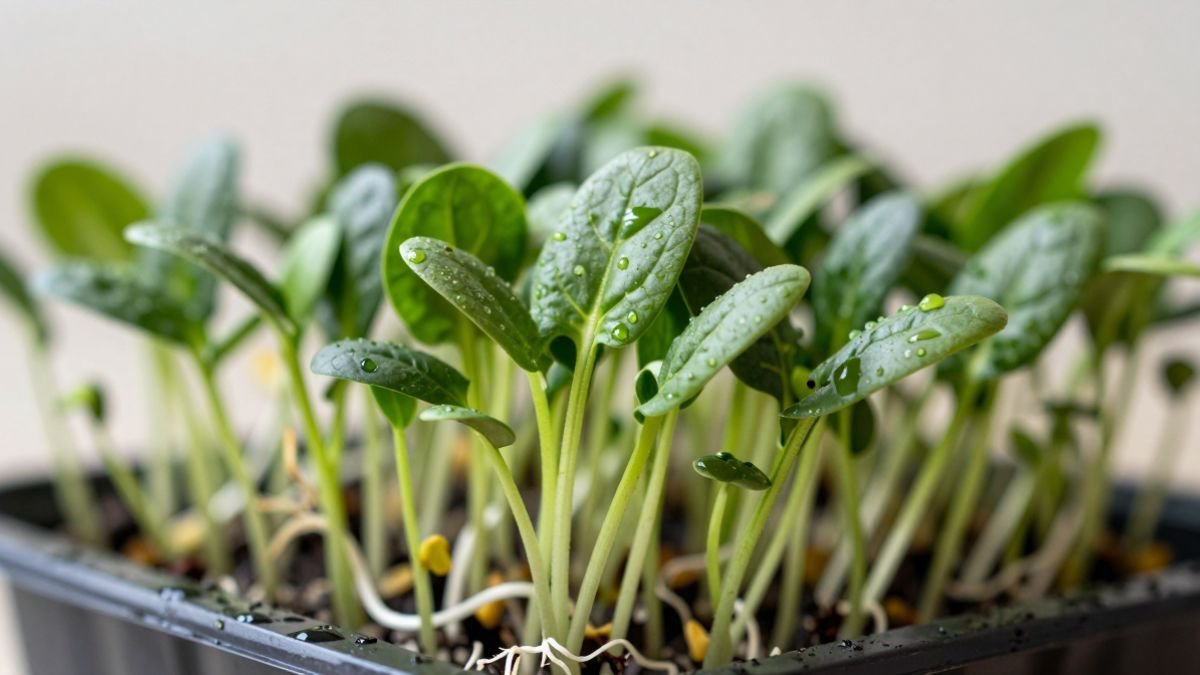
You planted your spinach seeds a week ago, watered faithfully, and checked every morning. Still nothing. Meanwhile, your neighbor’s tray is already showing green. Here’s the truth most gardening guides skip: spinach is wildly temperature-sensitive, and warm soil doesn’t just slow germination—it can stop it cold.
Most gardeners assume spinach is a cool-season crop that simply “likes” spring and fall. But the real story is more specific. Spinach seeds contain a natural inhibitor that kicks in above 70°F (21°C). When soil temperatures climb past that threshold, the seed essentially goes dormant to avoid sprouting into hostile heat. You’re not doing anything wrong. The soil is.
Realistic germination timelines by temperature
Under ideal conditions—soil between 50–65°F (10–18°C)—spinach germinates in 7 to 14 days. But that range shifts dramatically with temperature.
- 40–50°F (4–10°C): 14 to 21 days. Slow but steady.
- 50–65°F (10–18°C): 7 to 10 days. The sweet spot.
- 65–70°F (18–21°C): 10 to 14 days. Still workable, but slower.
- Above 70°F (21°C): Germination drops sharply. Above 75°F (24°C), many seeds won’t sprout at all.
If you’re sowing in late spring or early fall when air temperatures feel perfect, remember: soil lags behind air temperature. A sunny 65°F afternoon can mean 75°F soil in a raised bed or black plastic tray. That’s the hidden stall.

The ideal range and what happens above it
Spinach evolved in the cooler climates of central Asia. Its germination machinery is tuned to spring melt and autumn chill. When soil warms past 70°F, the seed coat releases compounds that block water uptake and enzyme activity. The seed doesn’t die—it waits.
This is why spinach sown in June often fails, even with daily watering. The moisture is there, but the biochemical “go” signal never fires.
What to watch for:
- Soil thermometer readings at 2-inch depth, taken mid-morning.
- Dark-colored containers or beds heat faster than light-colored or in-ground plots.
- Southern or west-facing beds can run 5–10°F hotter than shaded or north-facing spots.
If your soil is consistently above 70°F, you have three options: wait for cooler weather, move to a shadier spot, or use pre-treatment tricks.
Pre-chill and pre-soak options that actually help
When soil temperatures are borderline or you’re pushing the season, seed priming can buy you a few degrees of tolerance.
Pre-soaking (12–24 hours):
Soak seeds in room-temperature water for 12 to 24 hours before sowing. This softens the seed coat and jump-starts the imbibition process (water absorption). Drain and sow immediately. You’ll often see sprouts 2 to 3 days earlier.
Pre-chilling (3–5 days):
Wrap soaked seeds in a damp paper towel, seal in a plastic bag, and refrigerate (not freeze) for 3 to 5 days. This mimics winter dormancy and can override mild heat inhibition. Sow chilled seeds into soil up to 72°F and you may still get decent germination.
Combination method:
Soak for 12 hours, then chill for 3 days. This is the most reliable trick for late-season or marginal-temperature sowing.
One caution: don’t let soaked seeds dry out. Once water uptake begins, the germination clock is ticking. Sow within hours of removing from the fridge.
Sowing depth and moisture cues
Even perfect temperature won’t help if seeds are planted too deep or soil moisture swings wildly.
Depth:
Sow spinach seeds ½ inch deep (1.2 cm). Deeper than that, and the cotyledons (seed leaves) burn through their energy reserves before reaching light. Shallower, and seeds dry out or wash away.
In heavy clay or compacted soil, aim for the shallow end—closer to ¼ inch. In sandy or loose potting mix, ½ inch is safe.
Moisture:
Spinach needs consistent moisture during germination, but not saturation. The top inch of soil should feel like a wrung-out sponge.
- Water gently after sowing to settle seeds.
- Check daily. If the surface dries, mist or water lightly.
- Avoid overhead watering that crusts the soil. A crust can physically trap emerging seedlings.
In hot, dry conditions, cover the seeded area with a thin layer of burlap, shade cloth, or a board. Remove it as soon as you see green tips. This keeps soil cooler and moisture more stable.
When to re-sow and how to salvage patchy trays
If it’s been 21 days and you see fewer than 30% of seeds sprouted, it’s time to assess.
Check soil temperature first. If it’s still above 70°F, re-sowing won’t help. Wait for cooler weather or move the planting.
If temperature is fine but germination is patchy:
- Gently scratch the surface with a fork to break any crust.
- Water thoroughly and cover with shade cloth for 48 hours.
- Re-sow in the gaps using pre-soaked or pre-chilled seeds.
Don’t pull existing seedlings. Spinach is slow to establish, and even a few plants can fill in over 3 to 4 weeks.
For trays or flats:
If germination is under 50%, it’s often faster to start fresh. Sterilize the tray, use fresh potting mix, and apply the pre-soak method. Keep trays in a cooler spot—basement, north-facing porch, or shaded garage—until seedlings emerge.
Salvage tip:
If you have a few strong seedlings and many gaps, thin the strong ones and transplant extras into the empty cells. Spinach transplants surprisingly well if moved before the taproot develops (usually within 10 days of sprouting).

What to do right now
If you’re reading this in late December 2025, you’re in prime winter-sowing territory across much of the southern United States, or planning ahead for early spring in the north.
Immediate steps:
- Measure your soil temperature at seed depth. A simple probe thermometer works.
- If soil is below 70°F, sow directly or use pre-soaking for faster results.
- If soil is above 70°F, wait two weeks and check again, or move to a shadier, cooler spot.
- Mark your calendar for 10 days post-sowing. That’s your first check-in.
Spinach is forgiving once it’s up, but getting it to sprout is all about that narrow temperature window. Nail that, and you’ll have tender greens in 30 to 40 days—no mystery, no waiting, no wasted seed.