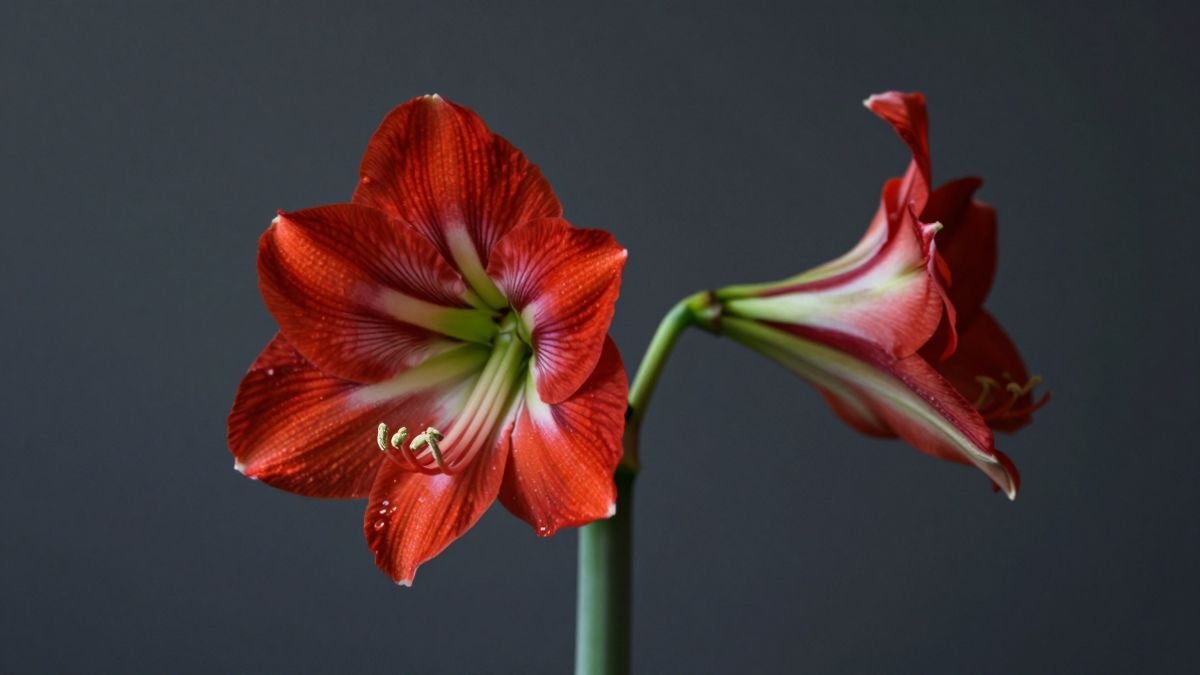
Most people toss their amaryllis the moment the last flower fades. But here’s what the big-box stores don’t tell you: that bulb is a perennial investment, and with a simple six-week schedule, you can coax it into blooming again next December—without buying a new one.
Reblooming an amaryllis isn’t about luck or a green thumb. It’s about understanding the plant’s natural cycle and giving it what it needs at the right time. Follow this calendar-based plan, and you’ll have holiday blooms year after year.
After bloom: what to cut and what to keep
Once your amaryllis flowers have wilted, cut the flower stalk down to about two inches above the bulb. Use clean, sharp scissors to prevent disease. But here’s the critical part: leave the leaves alone.
Those long, strap-like leaves are the bulb’s solar panels. They’ll spend the next several months photosynthesizing and storing energy for next year’s bloom. Cut them off now, and you’ve just sabotaged your rebloom.
Keep the plant in a sunny spot—preferably a south-facing window—and water it whenever the top inch of soil feels dry. Treat it like any other houseplant. The goal right now is leaf growth, not dormancy.

Leaf phase: light and feeding schedule
From late December through May, your amaryllis enters its growth phase. This is when the bulb rebuilds its reserves. Give it at least six hours of bright, indirect light daily. If your windows are dim, consider a grow light.
Feed the plant every two to three weeks with a balanced liquid fertilizer (10-10-10 or 20-20-20 works well). Dilute it to half strength to avoid burning the roots. Water thoroughly after each feeding, allowing excess to drain.
The leaves may grow to two feet or longer. That’s a good sign. The bigger and greener the foliage, the more energy the bulb is storing. Don’t be tempted to trim them for aesthetics.
Summer outdoors: when to move it and how much sun
Once nighttime temperatures stay consistently above 50°F—typically mid-May in most of the United States—move your amaryllis outside. This summer vacation is key to a strong rebloom.
Place the pot in a spot that gets morning sun and afternoon shade. Full sun all day can scorch the leaves; too much shade weakens the bulb. A patio corner or under a tree canopy works perfectly.
Continue watering and feeding through the summer. The outdoor environment—natural light, humidity, and airflow—will supercharge the bulb’s energy reserves. You’ll notice the leaves become thicker and more robust.
Leave the plant outside until early September, or until nighttime temperatures begin dipping into the low 50s. Don’t wait for frost; cold damage can ruin your rebloom efforts.

Dormancy: exact timing and signs
This is where most people get confused. Amaryllis bulbs need a rest period to trigger flowering. In their native South Africa, this happens naturally during the dry season. Indoors, you have to simulate it.
In mid-September, stop watering and feeding. Move the pot to a cool, dark location—a basement, garage, or closet works well. The ideal temperature is between 50°F and 55°F, but anywhere from 45°F to 60°F is acceptable.
Over the next eight to ten weeks, the leaves will yellow and collapse. This is normal. The bulb is redirecting all its energy inward. Don’t water during this time, even if the soil becomes bone dry. Dormancy is a rest, not a death.
Mark your calendar: the bulb needs at least eight weeks of dormancy to reset its blooming cycle. Less than that, and you may get leaves but no flowers.
Storage conditions
While the bulb rests, check on it every few weeks. The soil should be dry, and the pot should feel light. If you see any signs of mold or rot, move the pot to a slightly warmer, drier spot.
Some growers remove the bulb from the soil entirely and store it in a paper bag. This works, but it’s not necessary. Leaving it in the pot is simpler and less stressful for the bulb.
Don’t store the bulb near ripening fruit. Apples and bananas release ethylene gas, which can damage the flower bud forming inside the bulb.
Re-starting indoors for holiday blooms
In late November—about six to eight weeks before you want blooms—bring the pot back into the light. Place it in a warm room (65°F to 75°F) near a sunny window.
Trim off any dead leaves, but leave the bulb in its original pot. Water lightly to moisten the soil, then wait. Within a week or two, you should see a green shoot emerging from the bulb’s neck. That’s your flower stalk.
Once the shoot appears, resume regular watering. Keep the soil evenly moist, but not soggy. Rotate the pot every few days so the stalk grows straight instead of leaning toward the light.
The flower stalk will grow quickly—sometimes an inch a day. Buds will form at the top, and within four to six weeks of re-starting, you’ll have full blooms. If you time it right, your amaryllis will open just in time for Christmas or New Year’s.
Why this works year after year
Amaryllis bulbs are built to last. In the wild, they can live for decades. Each rebloom cycle actually strengthens the bulb, allowing it to produce more flower stalks and larger blooms over time.
Some bulbs will even produce offsets—baby bulbs that form alongside the parent. You can separate these and pot them individually, multiplying your collection without spending a dime.
The key is consistency. Follow the same schedule every year: growth phase, summer outdoors, dormancy, and restart. The bulb will learn the rhythm, and reblooming will become almost automatic.

Your next steps
If your amaryllis just finished blooming this December, start the plan today. Cut the flower stalk, keep the leaves, and place the pot in your sunniest window. Mark your calendar for mid-May (outdoor move), mid-September (dormancy start), and late November (restart).
If you’re reading this in the off-season, adapt the timeline to your current date. The six-week dormancy period is flexible—you can start it anytime between August and October to time blooms for the holidays.
Don’t throw out that bulb. With a little planning and zero guesswork, you’ll have a living holiday tradition that gets better every year.