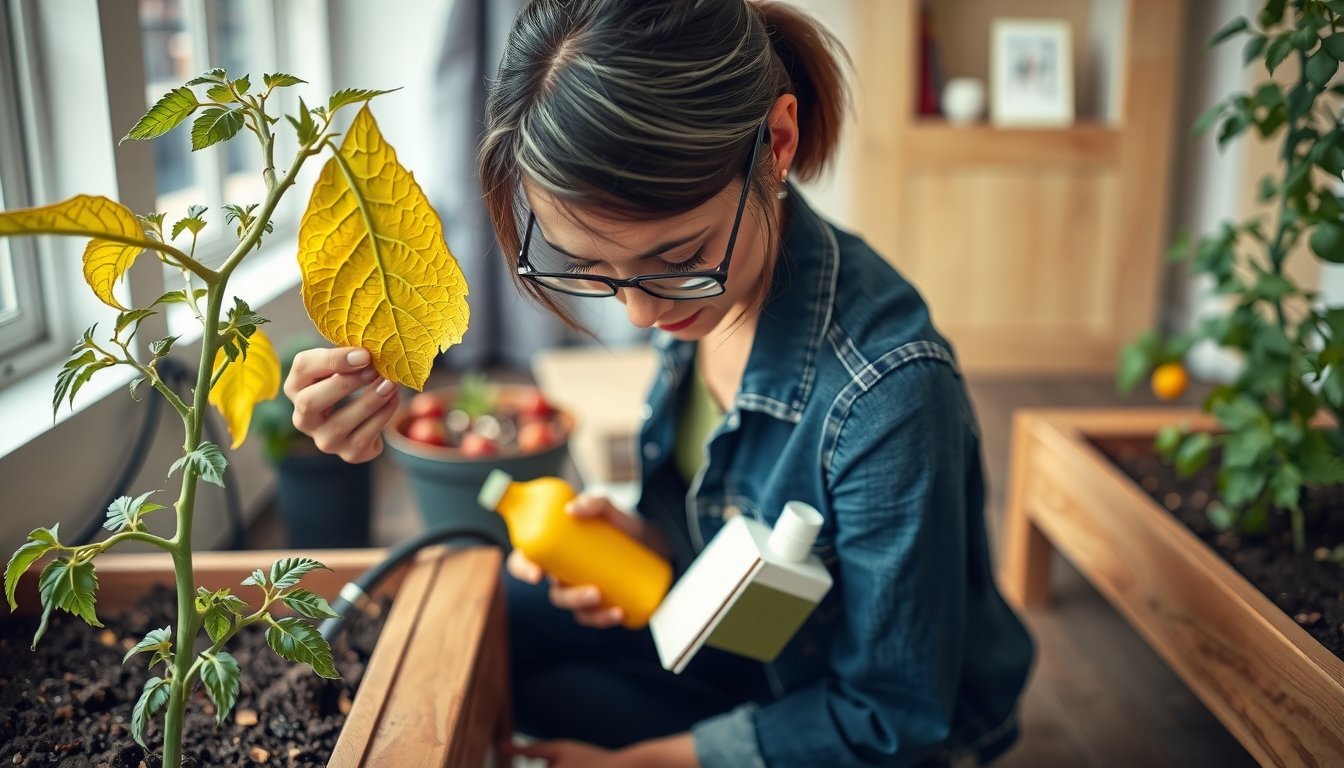
You’ve probably heard it a hundred times: when your plant looks sad, add Epsom salts. It’s one of those garden remedies passed down like folklore, often repeated but rarely explained. Here’s the truth: Epsom salts solve exactly one problem, and understanding what that problem is can save you from chasing the wrong fix while your plant continues to struggle.
The answer lies in a single element tucked inside every green leaf on your plant: magnesium.
What plants actually use magnesium ions to make
Magnesium is the unsung hero at the heart of chlorophyll, the molecule that makes photosynthesis possible. Without magnesium, plants can’t produce chlorophyll. Without chlorophyll, they can’t turn sunlight into energy. It’s that simple.
Think of chlorophyll as a tiny solar panel inside each leaf cell. At the very center of that panel sits a single magnesium ion, holding the entire structure together. No magnesium? No green pigment. No green pigment? No food production. The leaves start to yellow because the plant is literally losing its ability to feed itself.
This is why magnesium deficiency shows up as yellowing leaves, and why gardeners reach for Epsom salts (magnesium sulfate) as a quick fix. But before you grab that bag, you need to know if magnesium is actually the problem.
How to spot a real magnesium deficiency
Magnesium deficiency has a signature pattern that sets it apart from other issues. It starts with the older, lower leaves first. Why? Because magnesium is mobile within the plant. When supplies run low, the plant pulls magnesium from older leaves and shuttles it to new growth at the top.
The yellowing begins between the veins, leaving a distinctive pattern: yellow leaf tissue with green veins still visible. It’s called interveinal chlorosis, and it’s your clearest clue that magnesium might be missing.
As the deficiency progresses, the yellowing spreads upward. In severe cases, leaf edges may turn brown or curl, and the plant’s overall growth slows. You might also notice:
- Leaves dropping prematurely
- Stunted new growth
- Poor flowering or fruiting
- A general lack of vigor
But here’s where it gets tricky: several other problems look almost identical.
The lookalikes that fool even experienced gardeners
Nitrogen deficiency also causes older leaves to yellow first, but the yellowing is more uniform across the entire leaf, not just between the veins. The plant will look pale overall, and growth will be noticeably slow.
Overwatering can mimic magnesium deficiency perfectly. When roots sit in soggy soil, they can’t absorb nutrients properly, even if those nutrients are present. The result? Yellowing leaves with green veins, just like a magnesium shortage.
Light issues matter too. Plants growing in low light often develop pale, yellowish leaves because they’re not producing enough chlorophyll to begin with. Moving the plant to a brighter spot might solve the problem without adding anything to the soil.
Soil pH is the silent saboteur. Even if your soil contains plenty of magnesium, your plant can’t access it if the pH is off. Most plants absorb magnesium best when soil pH sits between 6.0 and 7.0. Outside that range, the magnesium gets chemically locked up.
This is why blindly adding Epsom salts doesn’t always work.

When to use Epsom salts and when to skip them
If you’ve ruled out the lookalikes and you’re confident it’s a magnesium deficiency, Epsom salts can help quickly. They dissolve easily in water and deliver magnesium in a form plants can use right away.
For potted plants, dissolve 1 tablespoon of Epsom salts in 1 gallon of water. Water your plant with this solution once a month during the growing season. Don’t overdo it—more is not better.
For garden beds, sprinkle 1 tablespoon per foot of plant height around the base of the plant, then water it in. You can also mix Epsom salts into the soil at planting time: about 1 tablespoon per hole for most vegetables and flowers.
Foliar feeding works too. Mix 1 tablespoon of Epsom salts per gallon of water and spray it directly on the leaves early in the morning or late in the evening. The plant can absorb magnesium through its leaves, giving you faster results.
But here’s the critical part: Epsom salts are a short-term fix, not a long-term solution. They address a symptom, not the underlying cause. If your soil is consistently low in magnesium, or if the pH is preventing uptake, you’ll be stuck treating the same problem over and over.
The long-term solution that actually works
Sustainable plant health comes from balanced nutrition and proper growing conditions, not from chasing deficiencies one at a time.
Start with a soil test. A basic test costs $10 to $20 through your local extension office and tells you exactly what’s in your soil, including magnesium levels and pH. This removes the guesswork.
If magnesium is genuinely low, work dolomitic lime into your soil. It provides both magnesium and calcium, and it gradually raises pH if your soil is too acidic. This is especially useful for gardeners dealing with naturally acidic soils.
If your pH is too high (above 7.5), magnesium can still be present but unavailable. In this case, you’ll need to lower the pH using sulfur or acidic organic matter like peat moss or compost.
Use a balanced, complete fertilizer that includes magnesium along with nitrogen, phosphorus, potassium, and other micronutrients. Look for products labeled as “complete” or “all-purpose.” Many synthetic and organic fertilizers now include magnesium specifically because deficiencies are common in container-grown plants and depleted garden soils.
Compost is your best friend for long-term soil health. It slowly releases a broad spectrum of nutrients, improves soil structure, and helps maintain a stable pH. A 2- to 3-inch layer of compost worked into your beds each spring can prevent many deficiencies before they start.
Finally, water correctly. Inconsistent watering—too much or too little—stresses roots and interferes with nutrient uptake. Most plants prefer soil that stays evenly moist but never waterlogged. Good drainage is non-negotiable.

Your next steps
If your plant’s leaves are yellowing and you suspect magnesium deficiency, take a methodical approach:
- Check the pattern: older leaves first, yellow between the veins, green veins intact?
- Rule out overwatering, low light, and nitrogen deficiency.
- Consider a soil test to confirm low magnesium or pH problems.
- Use Epsom salts as a short-term boost if you’re confident it’s magnesium.
- Invest in long-term soil health with compost, balanced fertilizer, and pH management.
Magnesium plays a starring role in every green leaf your plant produces. When it’s missing, the whole system breaks down. But when you understand what your plant actually needs, you can stop guessing and start growing with confidence.