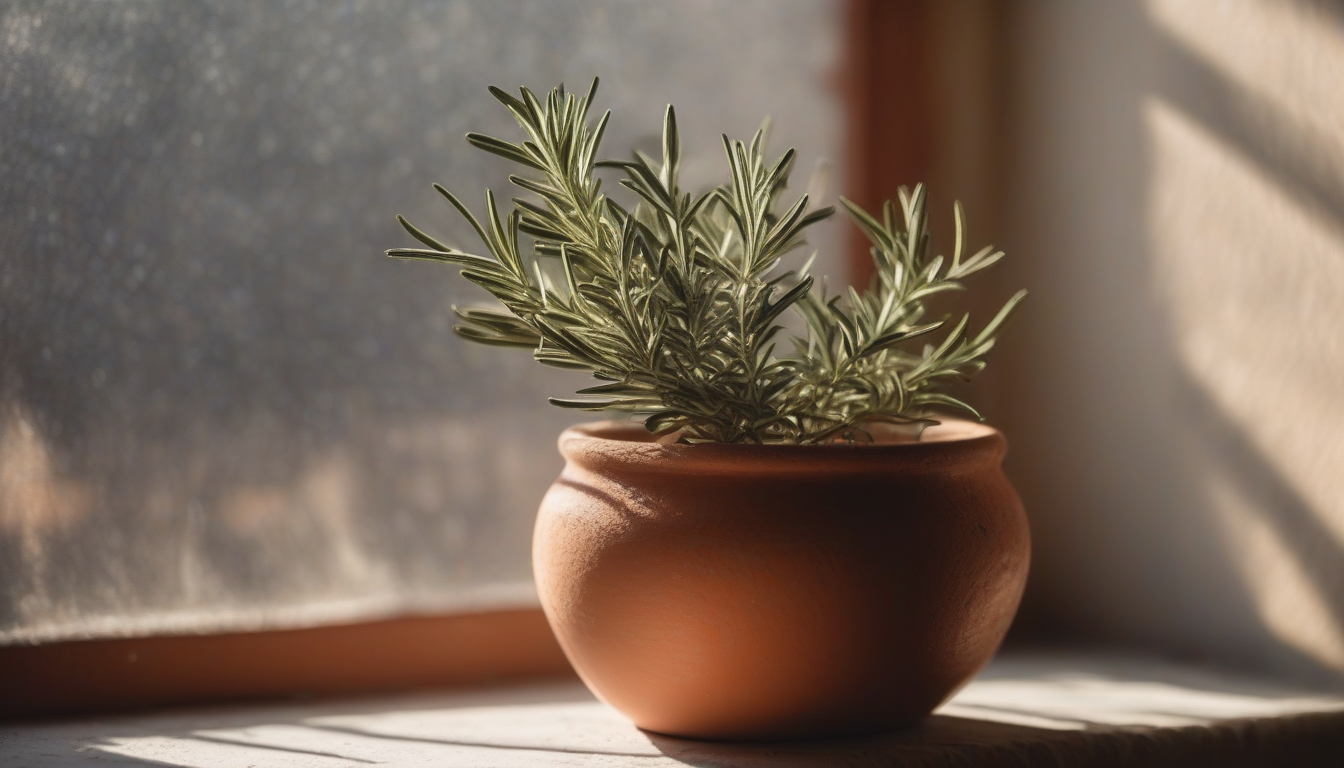
Your rosemary plant looked perfect at the garden center. Bushy, fragrant, full of life. Two weeks later, it’s dropping needles like confetti and turning brown from the bottom up. You watered it. You gave it a sunny spot. So what went wrong?
It’s not neglect killing your rosemary—it’s suffocation. The single most predictable reason rosemary dies indoors has nothing to do with how much you care. It’s about what’s happening in the pot, where roots are drowning in soil that holds water like a sponge.
Rosemary is a Mediterranean herb. In its native habitat, it grows in rocky, fast-draining hillsides where water disappears almost immediately. When we bring it indoors and plant it in standard potting mix, we create the exact opposite environment. The soil stays wet. The roots can’t breathe. And the plant slowly suffocates.
The drainage problem no one talks about
Most potting soil is designed to retain moisture—great for tropical houseplants, terrible for rosemary. Even if your pot has drainage holes, the soil itself can hold water for days. Rosemary roots need air pockets. When those pockets fill with water, root rot sets in fast.
Here’s what proper drainage looks like for rosemary:
- Mix standard potting soil with coarse sand or perlite (50/50 ratio)
- Use terracotta pots, not plastic or ceramic—terracotta breathes and wicks moisture away
- Ensure drainage holes are large and unobstructed
- Place a layer of small stones at the bottom only if the pot is very deep
The soil should feel dry one inch below the surface before you water again. If it’s still damp two days after watering, your drainage is too slow.
Light angle matters more than light duration
You’ve probably read that rosemary needs six to eight hours of sunlight. That’s true, but incomplete. The angle and intensity of indoor light are nothing like outdoor sun, even in a south-facing window.
Indoor glass filters out significant UV spectrum. The light that does come through hits the plant at a limited angle for only part of the day. Rosemary evolved under relentless Mediterranean sun—direct, overhead, intense. A bright windowsill in December in Boston or London simply can’t replicate that.
Signs your rosemary isn’t getting enough quality light:
- Leggy, stretched growth reaching toward the window
- Pale green or yellowish needles instead of deep green
- Weak, thin stems
- Slower growth or no new growth
If you’re in the Northern Hemisphere during winter (as we are now in mid-December 2025), natural light is at its weakest. Consider a full-spectrum grow light positioned 15 to 30 centimeters above the plant for 10 to 12 hours daily. This isn’t about replacing the sun—it’s about supplementing what winter windows can’t provide.
Watering intervals are not a schedule
This is where most people go wrong. They water every Sunday. Or every three days. Or whenever they remember. Rosemary doesn’t care about your calendar—it cares about soil moisture.
Indoor conditions change constantly. Humidity drops when heating kicks on. Air circulation varies by room. A watering schedule that worked in September will drown your plant in January.
Instead of a schedule, use this method:
- Stick your finger two inches into the soil
- If it feels even slightly damp, wait
- Only water when the soil is completely dry at that depth
- Water thoroughly until it drains out the bottom, then stop
In winter, this might mean watering every 10 to 14 days. In summer, maybe every five days. The plant and the environment tell you when—not the calendar.
Overwatering looks like underwatering at first. Both cause browning and needle drop. But overwatered rosemary will have soft, mushy stems near the soil line. Underwatered rosemary stays firm but brittle.

The indoor environment rosemary actually tolerates
Rosemary won’t thrive indoors the way it does outside—let’s be honest. But it can survive and provide you with fresh herbs if you create conditions it tolerates.
Temperature: Rosemary prefers cooler indoor temps, around 15 to 21°C. It struggles in overheated rooms above 24°C with dry air.
Humidity: It doesn’t need high humidity (unlike basil). Average indoor humidity of 40 to 50 percent is fine. Don’t mist it—wet foliage invites fungal problems.
Air circulation: Stagnant air is a problem. A small fan running nearby (not blowing directly on the plant) helps prevent fungal issues and strengthens stems.
Pot size: Don’t over-pot. Rosemary does better slightly root-bound. A pot that’s too large holds excess moisture in unused soil.
What to do right now if your rosemary is struggling
If your plant is already showing signs of decline, act quickly.
Check the roots. Gently remove the plant from its pot. Healthy roots are white or light tan and firm. Black, mushy, or foul-smelling roots mean rot. Trim away dead roots with clean scissors and repot in fresh, well-draining mix.
Prune dead growth. Cut away brown, crispy stems. This redirects energy to healthy parts and improves air circulation.
Adjust watering immediately. If the soil is wet, don’t water again until it’s bone dry. If it’s been dry for a while and the plant is crispy, water thoroughly once, then return to the finger-test method.
Move it to the brightest spot you have. Even if it’s not perfect, more light is almost always better for rosemary.

The bottom line
Rosemary dies indoors because we treat it like a houseplant when it’s really a drought-adapted shrub. It doesn’t want coddling. It wants neglect—but the right kind. Fast-draining soil, intense light, and infrequent deep watering.
You don’t need a green thumb. You need to stop doing too much. Let the soil dry out. Give it the brightest, coolest spot in your home. And resist the urge to water on a schedule.
Do that, and your rosemary won’t just survive winter indoors—it’ll actually grow.