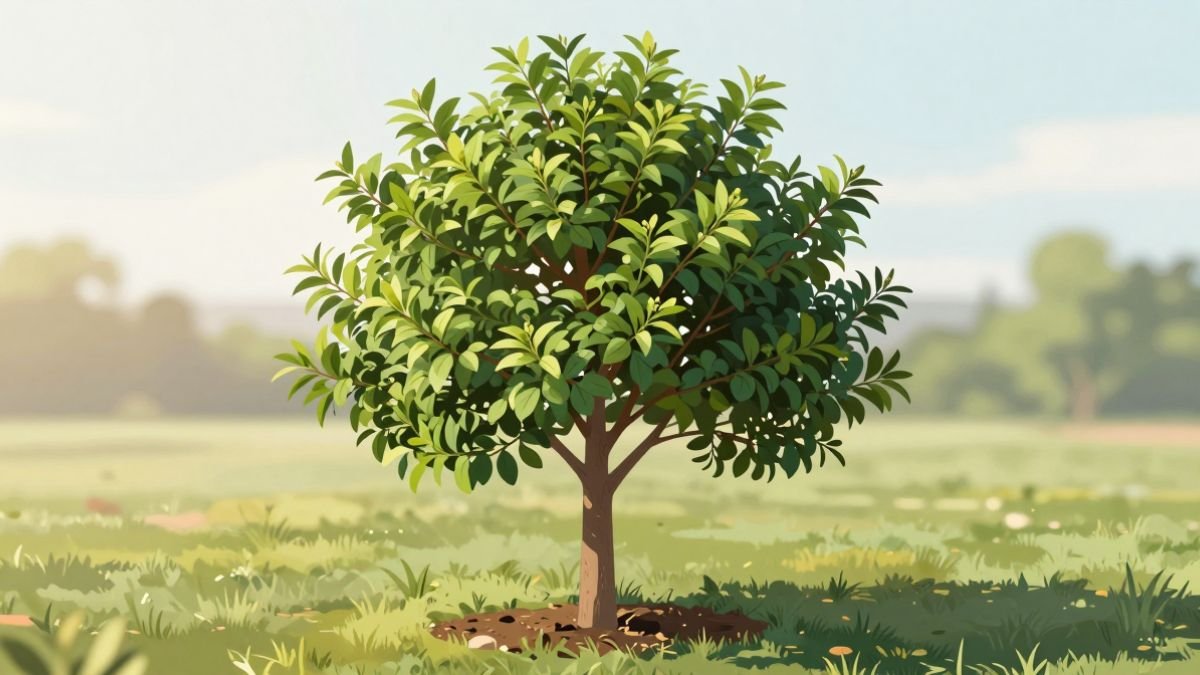
You planted a peach tree three years ago. It’s healthy, leafy, and tall. But spring after spring, you get flowers that drop without forming fruit—or worse, no flowers at all. The problem isn’t your care. It’s chill hours, and your tree may never have had a chance.
Chill hours are the single most overlooked factor in home fruit growing, and they explain why your neighbor’s apple tree produces bushels while yours sits there like an expensive ornament. Let’s fix that.
What chill hours actually are
Chill hours are the number of hours between 32°F and 45°F (0°C to 7°C) that a fruit tree experiences during winter dormancy. Most deciduous fruit trees—apples, peaches, pears, plums, cherries—need a certain amount of cold exposure to break dormancy properly and set fruit in spring.
Think of chill hours as a biological alarm clock. Without enough cold, the tree doesn’t “wake up” correctly. Buds open erratically, bloom timing gets scrambled, and fruit set fails. The tree survives, but it never delivers.
This isn’t about a single cold snap. It’s cumulative. Every hour in that temperature range between November and February (in the Northern Hemisphere) counts toward the tree’s requirement.

Why low-chill vs high-chill matters so much
Fruit tree varieties are bred for specific chill hour ranges:
- High-chill trees need 800+ hours. These thrive in climates with long, cold winters—think Michigan, upstate New York, or the Pacific Northwest.
- Mid-chill trees need 400–700 hours. They work well in transitional zones like northern California, Virginia, or the Midwest.
- Low-chill trees need under 400 hours. These are your only option in warm-winter areas like southern California, Florida, Texas, or the Gulf Coast.
Plant a high-chill apple in San Diego, and it will never fruit. Plant a low-chill peach in Minnesota, and it will bloom too early and get killed by late frosts. The mismatch is invisible until it’s too late.
This is why the same variety that thrives in one state becomes a dud two hundred miles south.
How to estimate your area’s chill hours
You don’t need fancy equipment. Here’s the quick way:
Check a chill hour map. The USDA and many state extension services publish chill hour maps. Search “chill hours [your state]” or “chill hour map United States.” These maps show average annual chill accumulation by county.
Use an online calculator. Websites like Dave Wilson Nursery and university extension sites offer chill hour calculators. Enter your zip code, and you’ll get a historical average.
Ask local nurseries. Independent garden centers that specialize in fruit trees know the local chill profile. They can tell you what works and what doesn’t.
General rules of thumb by region (U.S.):
- Deep South (Florida, coastal Texas, southern Arizona): 100–300 hours
- Mild South (coastal California, inland Texas, Georgia): 300–500 hours
- Transitional zones (northern California, North Carolina, Tennessee): 500–800 hours
- Cold-winter states (Northeast, upper Midwest, mountain West): 800–1,200+ hours
If you’re on the border between two zones, assume the lower number and choose accordingly.

Best fruit tree choices by chill range
Here’s a practical breakdown to guide your next planting:
Low-chill (under 400 hours):
- Peaches: ‘Tropic Snow’, ‘Flordaprince’, ‘Desert Gold’
- Apples: ‘Anna’, ‘Dorsett Golden’, ‘Ein Shemer’
- Plums: ‘Santa Rosa’, ‘Methley’
- Pears: ‘Kieffer’, ‘Hood’
- Figs: Most varieties (figs need very little chill)
- Citrus: All types (no chill requirement)
Mid-chill (400–700 hours):
- Peaches: ‘Elberta’, ‘Redhaven’
- Apples: ‘Gala’, ‘Fuji’, ‘Granny Smith’
- Pears: ‘Bartlett’, ‘Bosc’
- Cherries: ‘Stella’, ‘Lapins’ (sweet cherries)
- Plums: ‘Satsuma’, ‘Shiro’
High-chill (800+ hours):
- Apples: ‘Honeycrisp’, ‘Granny Smith’ (some strains), ‘McIntosh’
- Pears: ‘Anjou’, ‘Comice’
- Cherries: ‘Bing’, ‘Rainier’
- Apricots: Most standard varieties
- Peaches: ‘Redhaven’, ‘Cresthaven’
When in doubt, choose a variety bred for one zone colder than yours. It’s safer to have a little extra chill than not enough.
What to do if you already planted the wrong tree
You’re not stuck. Here are your options:
Option 1: Wait and observe. Some trees will surprise you. A marginally mismatched tree might fruit lightly or inconsistently. If you’re getting some fruit, it may be worth keeping.
Option 2: Graft a compatible variety onto the existing rootstock. If the tree is healthy and the rootstock is adapted to your soil, a skilled gardener or arborist can graft a low-chill or high-chill scion onto it. You keep the root system and get a variety that actually works.
Option 3: Replace it. If the tree is young (under three years) and you’ve seen zero flowers, cut your losses. Replant with a variety matched to your chill hours. You’ll get fruit years sooner than waiting on a tree that will never perform.
Option 4: Move it (if small). Bare-root or container trees under four feet can sometimes be relocated to a friend or family member in a different climate zone. Your dud might be their star.
Don’t let sunk cost keep you waiting another five years.

The bottom line
Chill hours are not negotiable. Your care, fertilizer, and watering won’t override a biological mismatch. But once you know your zone’s chill accumulation and choose varieties accordingly, fruit growing becomes dramatically easier.
Before you buy your next tree, ask the nursery or check the tag for the chill hour requirement. Match it to your area. That one step will save you years of disappointment.
If you’re planning for spring 2026 planting, now—mid-December 2025—is the perfect time to research, map your chill hours, and order bare-root stock from specialty nurseries. The trees that fruit abundantly aren’t lucky. They’re just properly matched.