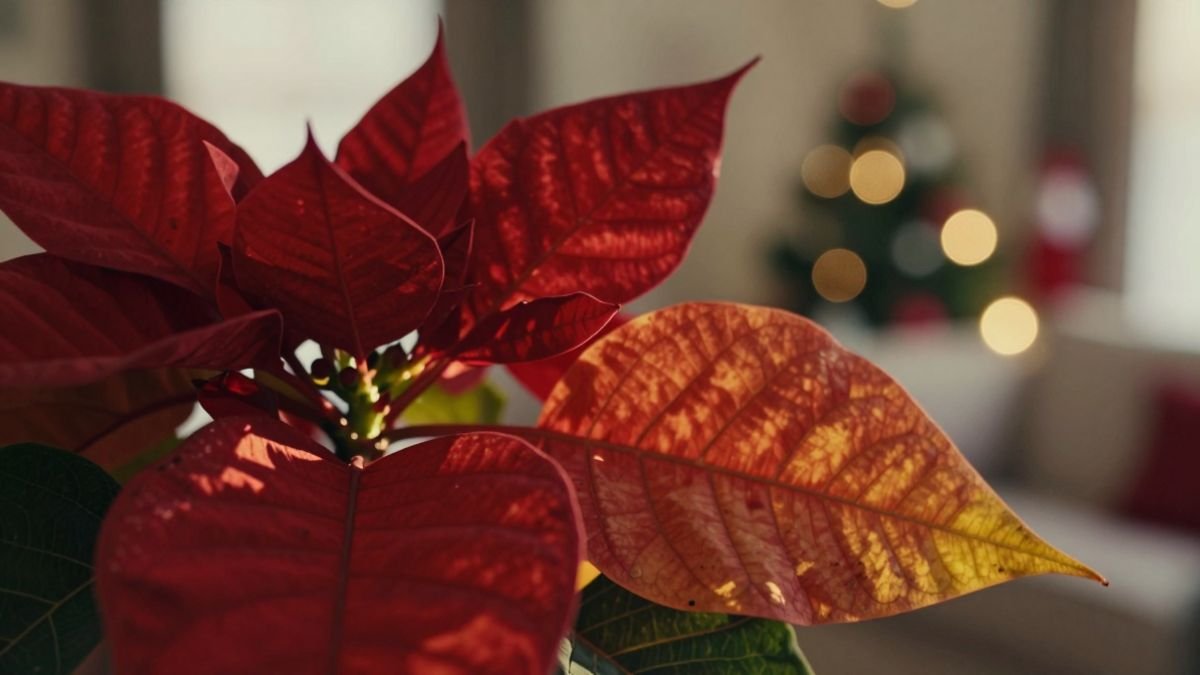
You know that sinking feeling when you walk past your once-gorgeous poinsettia and notice another scatter of leaves on the table? What started as a festive centerpiece three weeks ago now looks like it’s staging a dramatic exit right before the holidays. Here’s the truth: your poinsettia isn’t dying out of spite—it’s screaming for help in the only language it knows.
The good news? You have time to turn this around before Christmas Day. Let’s dig into what’s actually happening and the exact fixes that work.
The real reasons poinsettias shed leaves (it’s not what you think)
Most people blame themselves, but here’s what’s really going on:
Temperature shock is the silent killer. Poinsettias are tropical plants from Mexico—they despise cold drafts. That spot near your front door or next to the window where icy air seeps in? It’s slowly torturing your plant. Even a brief exposure to temperatures below 50°F triggers leaf drop.
Overwatering drowns the roots. We’ve all done it—kept the soil constantly soggy because “it needs water.” But poinsettias hate wet feet. Waterlogged roots can’t breathe, they start to rot, and the plant jettisons leaves to survive.
Underwatering creates panic mode. On the flip side, letting the soil dry out completely sends your poinsettia into crisis. It drops leaves to conserve energy.
Light matters more than you’d expect. These plants need bright, indirect light for 6+ hours daily. That dim corner of your living room? Not cutting it.

The 72-hour rescue plan
Here’s your step-by-step fix, starting right now:
Day 1: Relocate immediately
- Move your poinsettia away from drafty windows, doors, and heating vents
- Find a spot with bright, indirect sunlight (an east or west-facing window is ideal)
- Keep room temperature between 65-70°F during the day, no lower than 60°F at night
Day 2: Fix your watering routine
- Stick your finger 1 inch into the soil—if it’s dry, water thoroughly until it drains from the bottom
- If it’s soggy, hold off on water and improve drainage by ensuring the decorative foil wrapper has holes
- Going forward: water only when the top inch of soil feels dry to the touch
Day 3: Address humidity and stress
- Poinsettias love humidity—place the pot on a tray of pebbles with water (pot should sit above water level)
- Mist leaves lightly every few days if your home is particularly dry
- Remove any yellow or fully dropped leaves to redirect energy to healthy growth
The maintenance routine through New Year’s
Stop fertilizing until spring. Your poinsettia is in “display mode” right now, not growth mode. Feeding it now actually stresses it out.
Watch for pests. Check the undersides of leaves weekly for tiny white flies or sticky residue. Catch problems early with insecticidal soap.
Keep it away from fruit bowls. Ripening fruit releases ethylene gas, which causes leaf drop. Keep your poinsettia separate from your banana stash.

What to expect (the honest timeline)
If you catch the problem early, you’ll see new growth stabilize within 5-7 days. Existing leaves will perk up and stop falling. If your plant has already lost 50%+ of its leaves, it will survive but might look sparse through the holidays—think of it as character.
The worst-case scenario? If roots are severely rotted (plant wobbles in pot, stems are mushy), you might be too late for this year. But don’t toss it yet—with proper care, poinsettias can rebloom next December.
The bottom line
Your poinsettia isn’t fragile—it’s just particular. Think of it as a houseguest from the tropics who needs consistent warmth, the right amount of attention, and zero drama. Give it stable conditions, and it’ll reward you with vibrant color through the entire season.
You’ve got this. And if a few more leaves fall before things stabilize? That’s normal. Healing takes time, even for plants.