You know that moment when you drag a heavy ceramic pot across the yard and think, “There has to be an easier way to grow tomatoes?”
That was me last spring. My back was tired. My pots were cracking. And every plant seemed to dry out at the worst possible time.
So I gave grow bags an honest, full-season test. Here’s what actually happened and whether they’re worth your money.
What grow bags are and why everyone is talking about them
Grow bags are flexible containers made of breathable fabric. They look simple, almost too simple, but that design is the secret.
Gardeners love them because they’re lightweight, affordable, and easy to move as the seasons change.
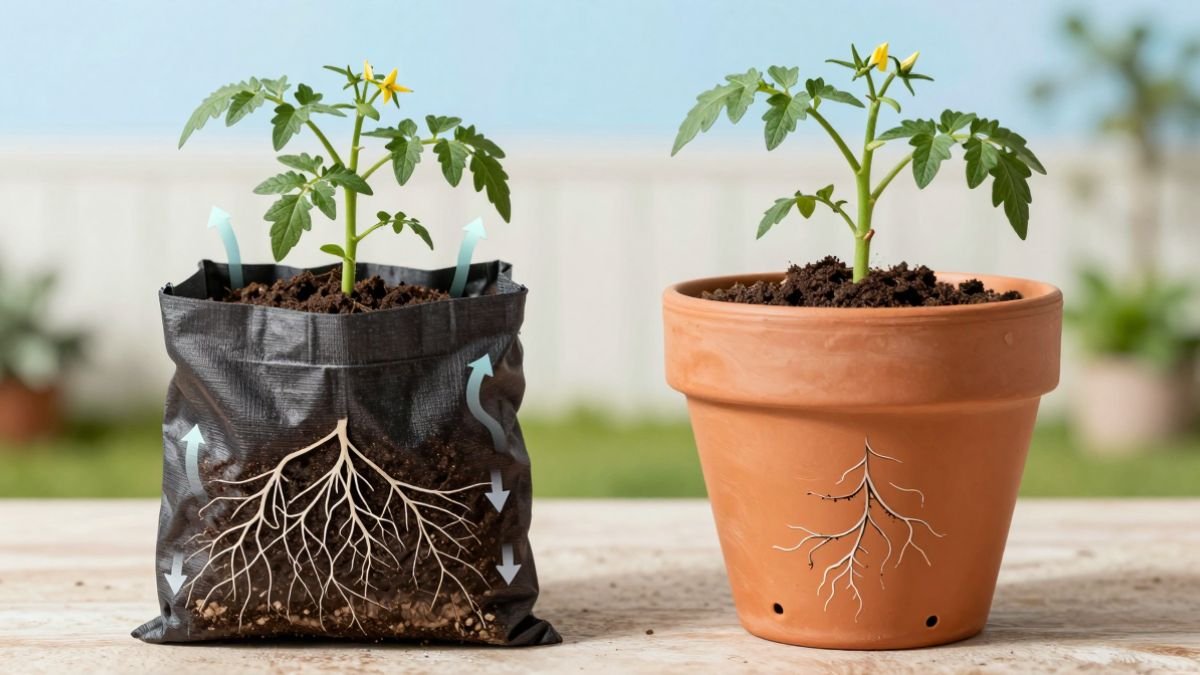
They’re also trending because the fabric allows roots to breathe instead of circling around the pot. This helps plants grow a stronger root system with less stress.

The pros of grow bags after a full season
Better airflow and healthier roots
Pots often trap heat and moisture. Grow bags don’t. The fabric lets air reach the roots so plants stay cooler and avoid root rot.
I noticed sturdier, bushier growth on tomatoes and peppers compared with my old plastic containers.
Less mess and easier mobility
Grow bags weigh almost nothing when empty. When storms rolled in, I could lift and shift the bags without wrestling a 40-pound pot.
More forgiving for beginners
Overwatering is a classic mistake. Bags drain fast, so they’re more forgiving. Water flows out the sides and bottom, preventing that swampy soil feeling.
Space-saving for small yards and balconies
You can fold them flat in winter. No storage drama. No broken pots.
The downsides you should know
They dry out faster
Breathable fabric is great… until you forget to water.
On hot days, my bags needed water every morning. Pots hold moisture longer, so if watering daily sounds stressful, that’s a factor.
They lose shape over time
By the end of the season, a few of my cheaper bags sagged a bit. Still usable, but not pretty.
They’re not ideal for very tall plants
Large shrubs or trees can tip over. For those, solid pots win.

Grow bags vs pots vs raised beds: how they compare
Grow bags:
Great airflow, lightweight, budget-friendly. Best for mobile or small-space gardens.
Pots:
Hold moisture longer and look more polished. Good for decorative plants or people who can’t water often.
Raised beds:
Most stable and highest yield. But they require space, lumber, and a bigger upfront cost.
The best plants for grow bags
From my season-long experiment, these plants did incredibly well:
- Tomatoes: They produced earlier and recovered faster from heatwaves.
- Potatoes: Honestly the easiest potato harvest ever.
- Herbs: Basil, parsley, mint, and chives stayed compact and fragrant.
- Strawberries: Perfect drainage kept berries sweet and mold-free.
How to set them up the right way
Use a light, fluffy soil mix
A blend of potting mix, compost, and coconut coir works well. Heavy garden soil compacts quickly in fabric.
Check drainage
Most bags drain naturally. Place them somewhere water can escape without creating puddles.
Water consistently
Stick your finger into the top few centimeters. If it feels dry, water until it runs out the bottom.
Add a saucer or tray if needed
Helps prevent patios from becoming muddy.
Common mistakes to avoid
Overfilling the bag
Leave a few centimeters at the top. This prevents soil spillover when watering.
Letting them dry out
Fabric sides wick moisture quickly. A mulch layer helps. I used straw and noticed longer moisture retention.
Choosing bags that are too small
Tomatoes need at least 10 gallons (38 L). Herbs can use 1–3 gallons (4–11 L).

My verdict after one full growing season
Grow bags surprised me. They made gardening lighter, cleaner, and more flexible. I didn’t miss heavy pots at all.
If you want healthy plants without extra work, grow bags are absolutely worth trying.
Recommended sizes and budget picks
- Herbs: 1–3 gallon (4–11 L) bags
- Strawberries: 3–5 gallon (11–19 L) bags
- Tomatoes & peppers: 7–10 gallon (26–38 L) bags
- Potatoes: 10–15 gallon (38–57 L) bags, preferably with a harvest flap
If you’re on a budget, multipacks from reputable brands work great. For durability, choose thicker 300–400 GSM fabric bags.
Give one a try next season. Your plants—and your back—may thank you.