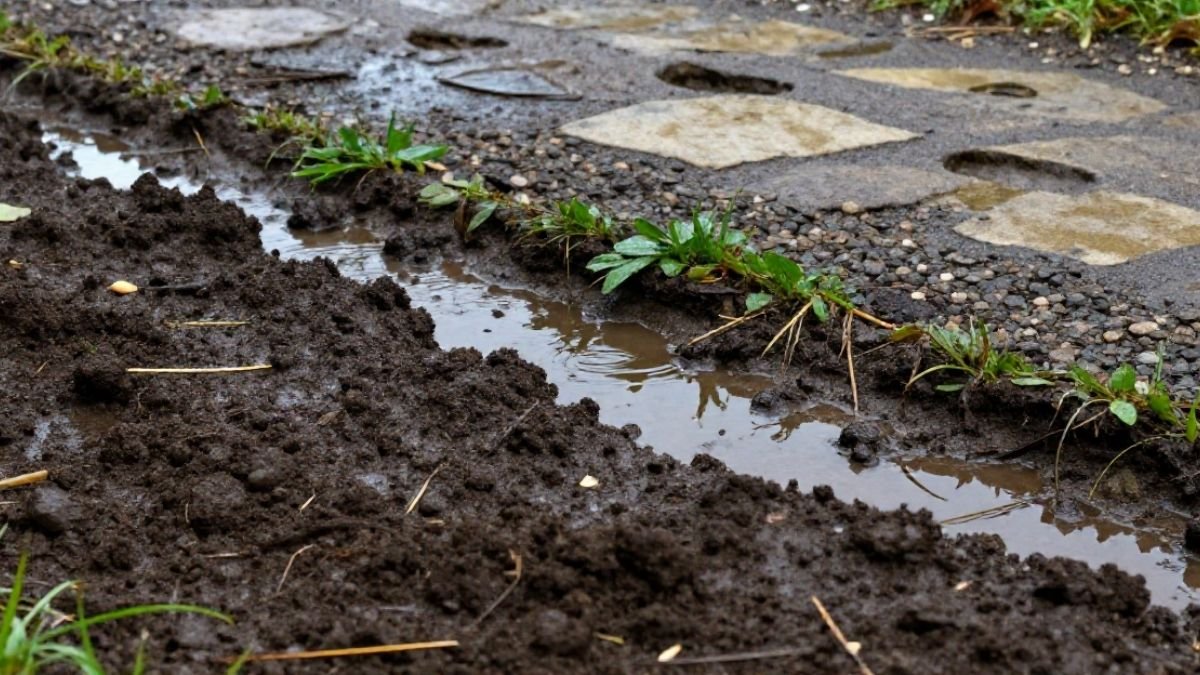
Last winter I watched my courtyard turn into a shallow pond. Two weeks later the same beds were locked under a sheet of ice. That kind of weather whiplash is rough on plants. Roots drown in standing water, then weakened stems snap under frozen rain. The good news is that a few small preparations make an enormous difference, even in a tiny garden or on a balcony.
What floods and ice really do to plants
In heavy rain the first problem is oxygen. Soil pores fill with water and roots cannot breathe. If that is followed by a sudden freeze, saturated stems and buds can burst. Branches become brittle and break under the weight of ice. Once you understand this, the goal becomes simple. Help water move away quickly and keep roots insulated from fast temperature swings.
Before heavy rain: lift, open, redirect
When rain is forecast, I walk around the garden with three questions in mind. Where will water collect, what can I lift and what can I unblock. Try these low effort steps.

- Raise pots on bricks, old tiles or plastic pot feet so water can escape from the drainage holes.
- Remove deep saucers from under outdoor containers so they do not turn into mini ponds.
- Check that gutters, balcony drains and the channels between paving slabs are not blocked with leaves.
- In beds, make a very shallow groove with a hoe to guide water away from the lowest spot toward a safe place, for example a gravel path.
Nothing here needs to look fancy. The aim is simply to keep roots from sitting in cold soup for days.
After a flood: rescue roots without rushing
Once the water has gone, the temptation is to poke and dig. I have learned to wait. Let the soil drain until it is damp rather than shiny wet. Then.
- Gently loosen only the top couple of centimetres of soil with a hand fork to bring air back in.
- Trim broken stems but leave apparently dead branches for a few weeks. Some will surprise you in spring.
- For pots that smell sour, slide the root ball out. If the roots are brown and mushy at the bottom, cut that part off, repot in fresh mix and water lightly.
- Do not feed recently flooded plants. Encouraging soft new growth too soon makes them more vulnerable to the next cold snap.
Before an ice storm: wrap, group, cushion
Ice storms are noisy and dramatic. The tricks that helped me most looked ridiculous but worked.

- Pull containers close together against a wall, which holds a little stored warmth.
- Wrap the outside of the pots, not the leaves, with old towels, bubble wrap or folded cardboard secured with string.
- Mulch the soil surface with dry leaves, straw or even torn up cardboard to slow rapid freezing.
- For shrubs and small trees, loosely tie flexible branches together with soft twine so they support each other instead of splaying and snapping.
If freezing rain is already falling, avoid shaking branches. When ice is fresh it is easy to think you can knock it off, but frozen wood snaps quickly. Wait for a mild hour and then gently brush off softened ice with a gloved hand.
A small emergency kit for wild weather
These days I keep a winter basket by the back door. In it are bricks, a roll of fleece, a few old towels, string and a hand fork. On stormy weeks I also keep a folded list of my most precious pots, so I know which ones to move first. Weather will probably stay jumpy. Flood one weekend, bright sun the next, then glassy pavements.
Plants cannot run indoors, so we give them structure and padding instead. You do not need big muscles or expensive gear for that.
Just a short walk round the garden before and after each wild spell, a little lifting, a little wrapping and the quiet satisfaction of seeing green life stand up again when the water drains away.